Planning a bathroom renovation? Get a Quote
Project Case Study — Bathroom Renovation

Complete Bathroom Renovation in Keilor East

Some renovations are about changing the look of a room. This one was about improving how it worked every day. By rebuilding the bathroom from the inside out, we created a space that's more practical, more comfortable and ready for years of daily use.

Location
Keilor East, VIC
Duration
2 Weeks
Team
3 People
Scope
Full Strip-Out & Rebuild
Project Snapshot
ProjectBathroom Renovation
LocationKeilor East, Victoria
PropertyResidential
Duration2 Weeks
ScopeFull Strip-Out & Rebuild
StyleContemporary
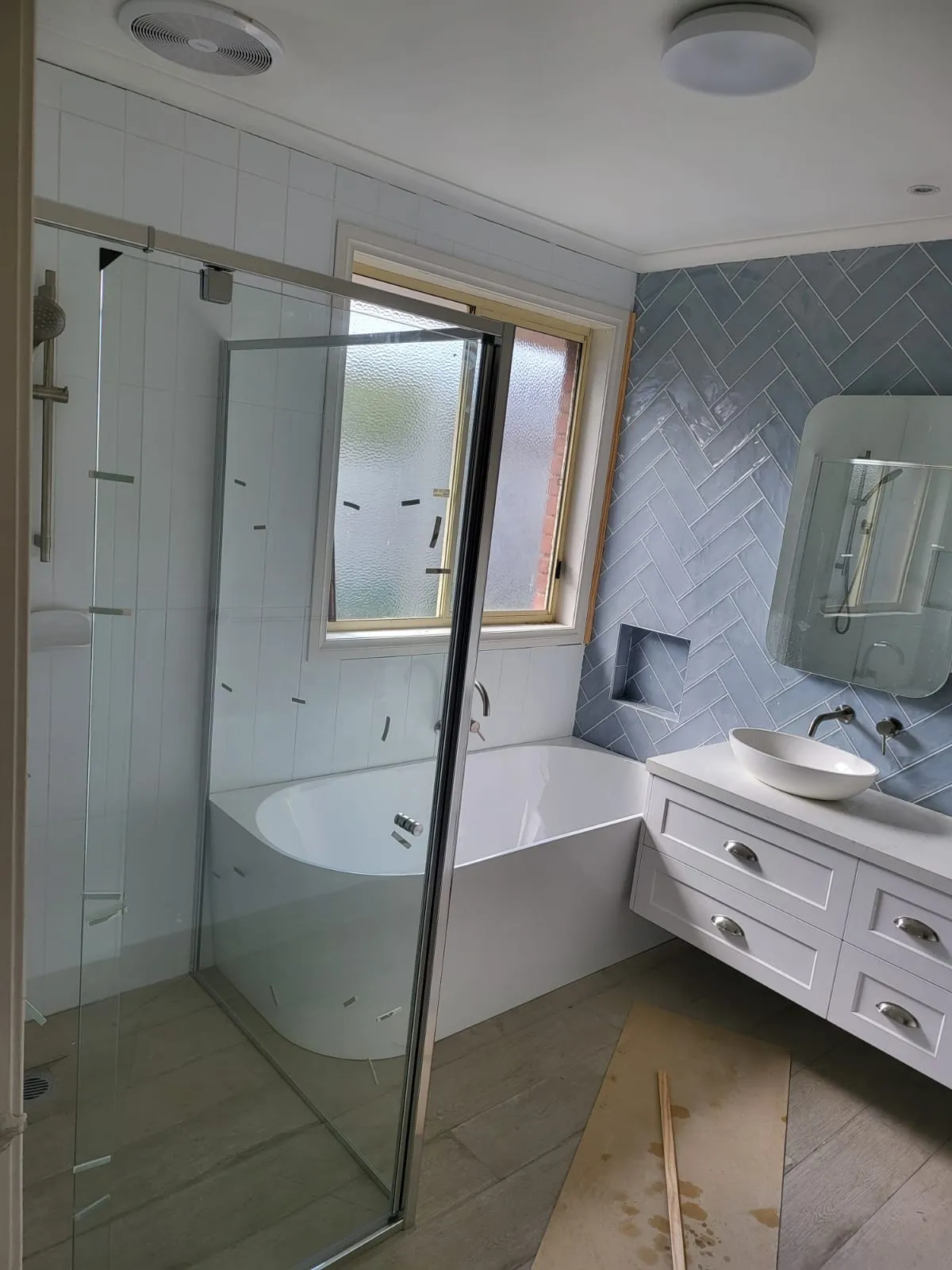
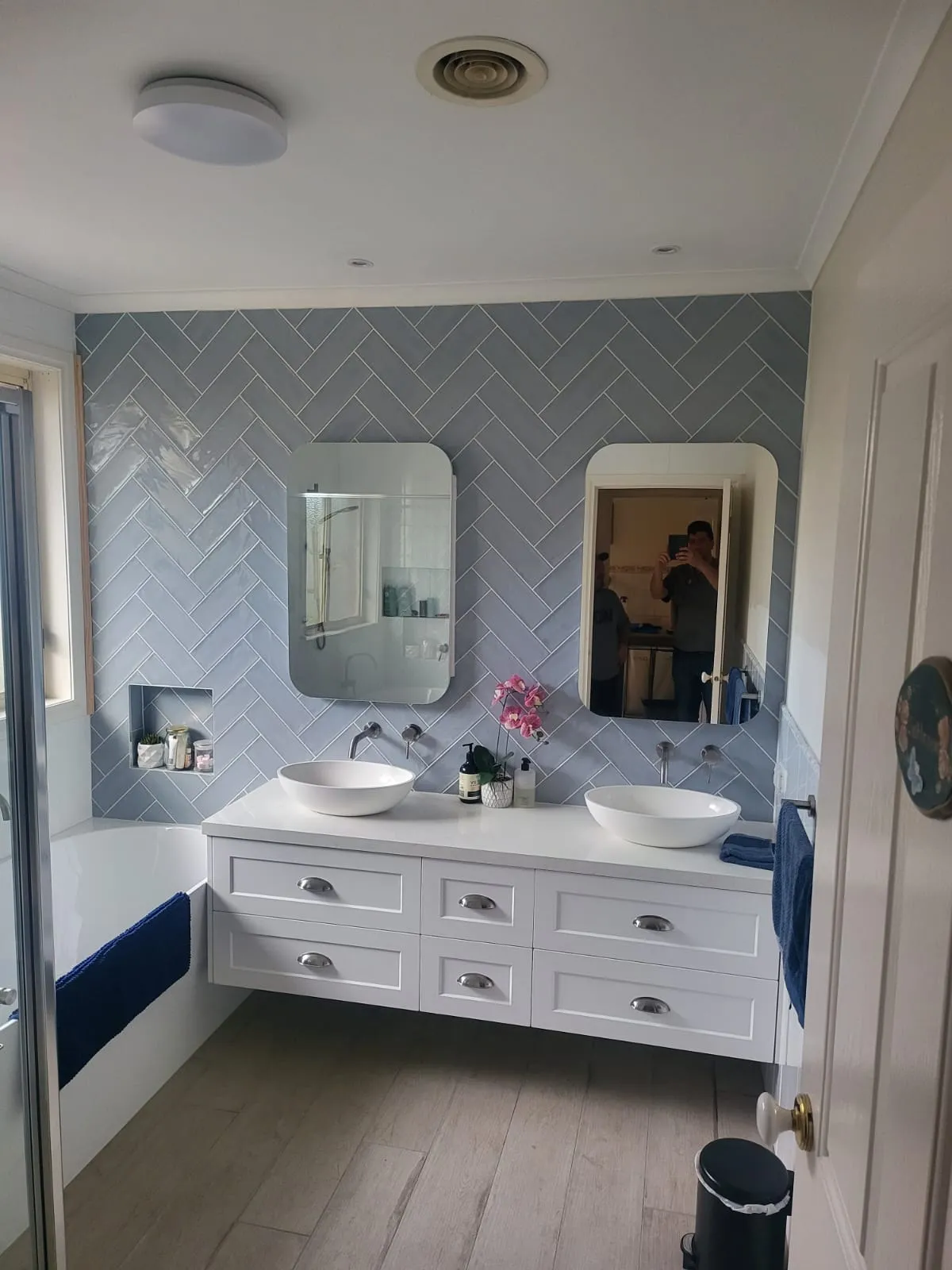
Key FeaturesHerringbone feature wall, floating vanity, frameless shower
The Challenge

The Challenge

Like a lot of older bathrooms, this one still did the job. But it didn't really suit how the family used it day to day.

The pipes and wiring behind the walls were old. Old enough that a fresh coat of paint wasn't going to fix the real problem.

There was only one basin, and the bath and shower shared the same space. The new layout makes the bathroom easier to share and more practical for everyday use.

It's the kind of bathroom renovation that goes well beyond a fresh coat of paint.

The first problem only showed up once we started pulling things apart. You can't tell how old the plumbing and wiring really are just by looking at a tiled bathroom. You only find out once the walls come down.

The second problem was fitting everything in. A freestanding bath, a separate shower, and a double vanity in one room only works if every pipe is in the right spot first. Once the tiling starts, there's no moving things.

💡
Expert Tip

If your bathroom is more than 15 to 20 years old, the pipes and wiring behind the tiles are probably the original ones. It's worth asking any renovator straight up — are they replacing that, or just covering it over? The answer changes what you're actually paying for.

The Solution

The Solution

So we didn't just freshen things up. We went back to the frame and replaced what was hidden. Then we built a new layout — a freestanding bath, a separate shower, and a vanity big enough for two people at once.

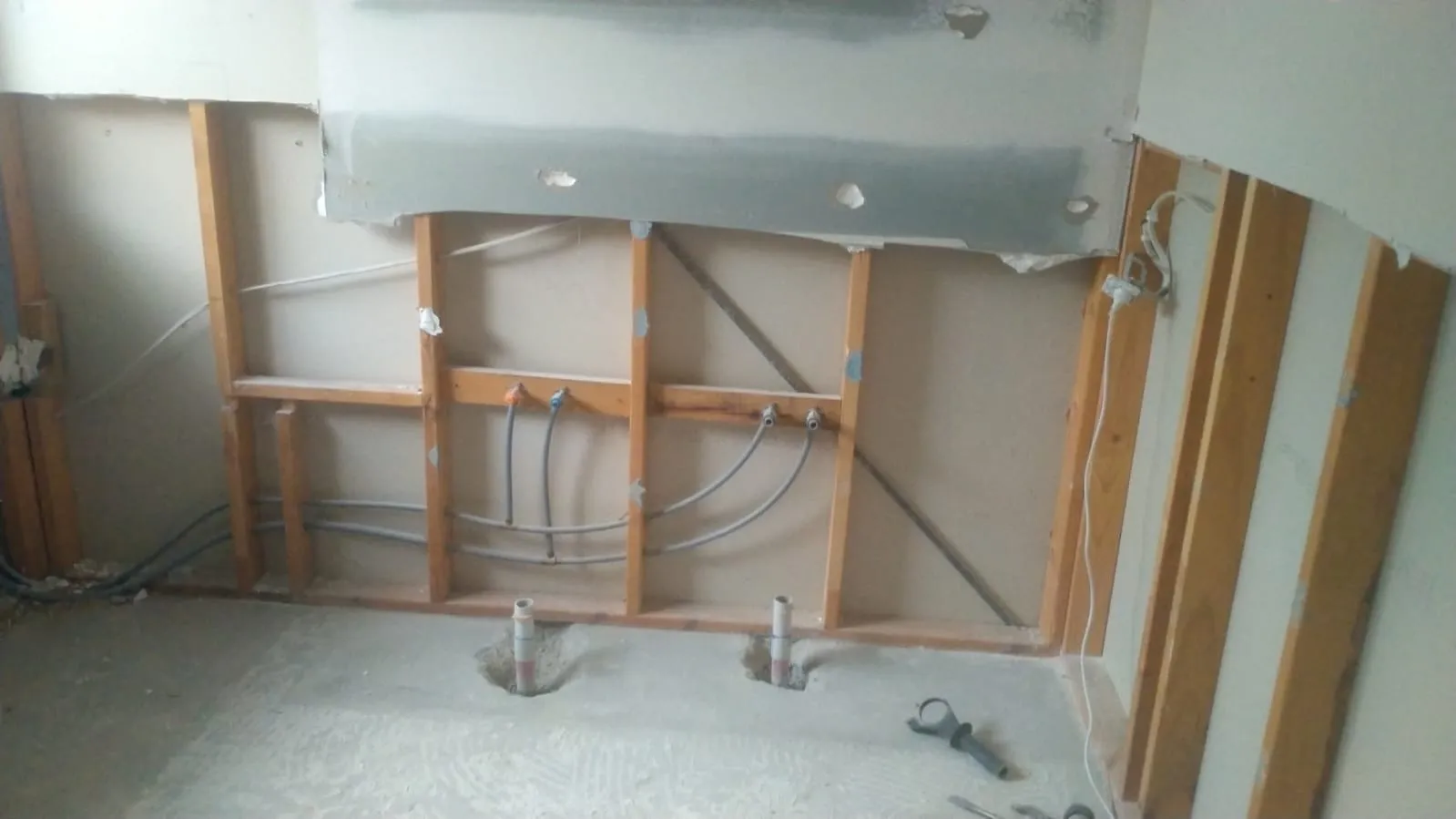
Every full renovation starts the same way. You pull back only as far as you need to, but far enough that nothing gets missed. Here, that meant taking the room right back to the bare frame and slab.

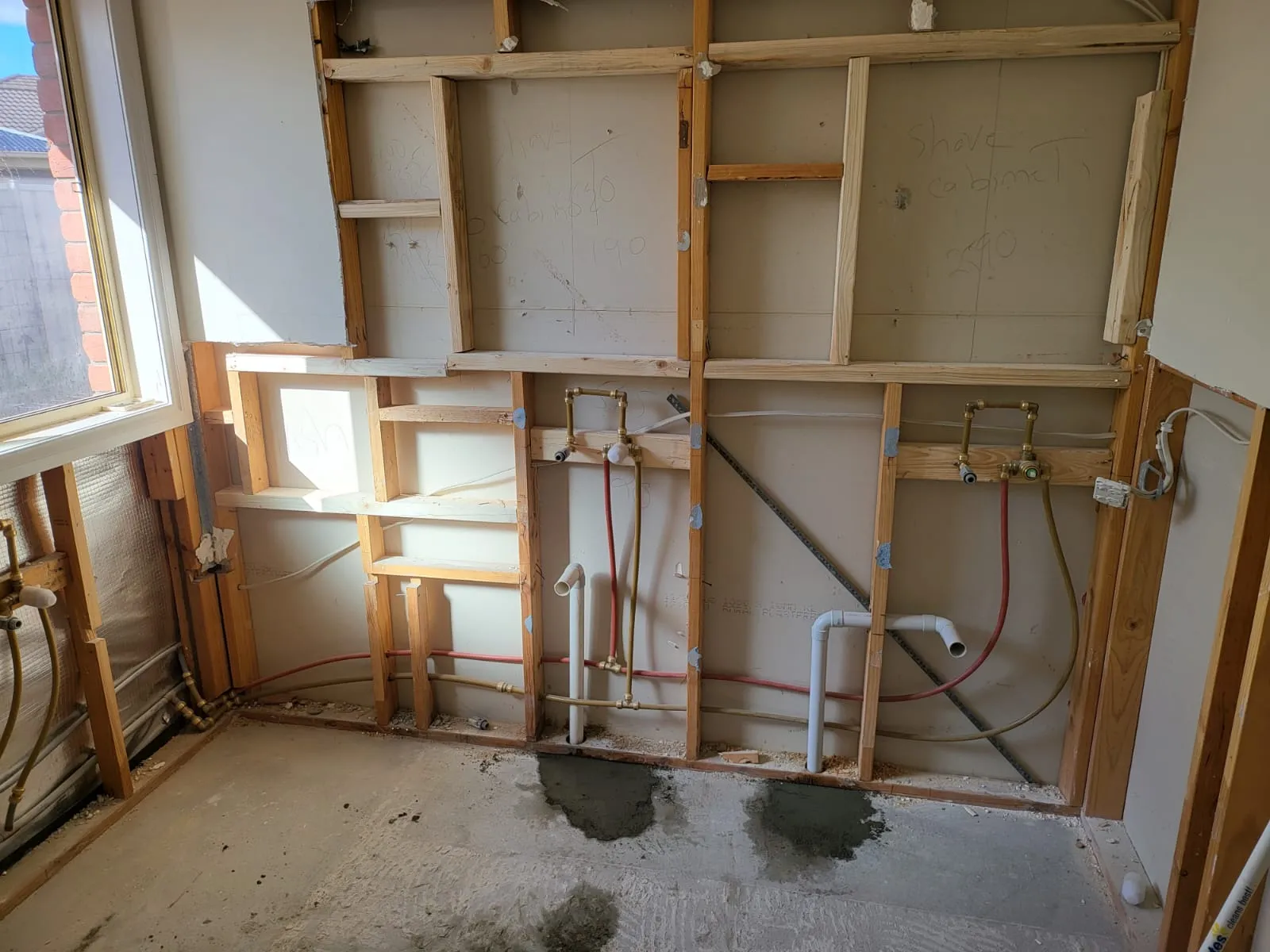
Once the frame was open, we marked out where the cabinets would go, right on the timber. You can actually see those chalk marks in the demolition photos. That's how we made sure the new vanity would land in exactly the right spot, before any tiles went down.

New plumbing and wiring came next. We ran everything through the frame with the finished layout already in mind.

Before the walls were closed up, we checked and signed off on all of that work. A waterproof layer was then added — a coating that goes on before tiling to help protect the bathroom from leaks and moisture for years to come. You'll never see it, but it's one of the most important parts of the whole job.

The design choices came last. The herringbone wall, the floating vanity, the frameless shower — all of that happened once the bones of the room were sorted.

Why This Matters

Getting the hidden work sorted first means everything you actually see and use every day is sitting on something solid, not just dressed up on top.

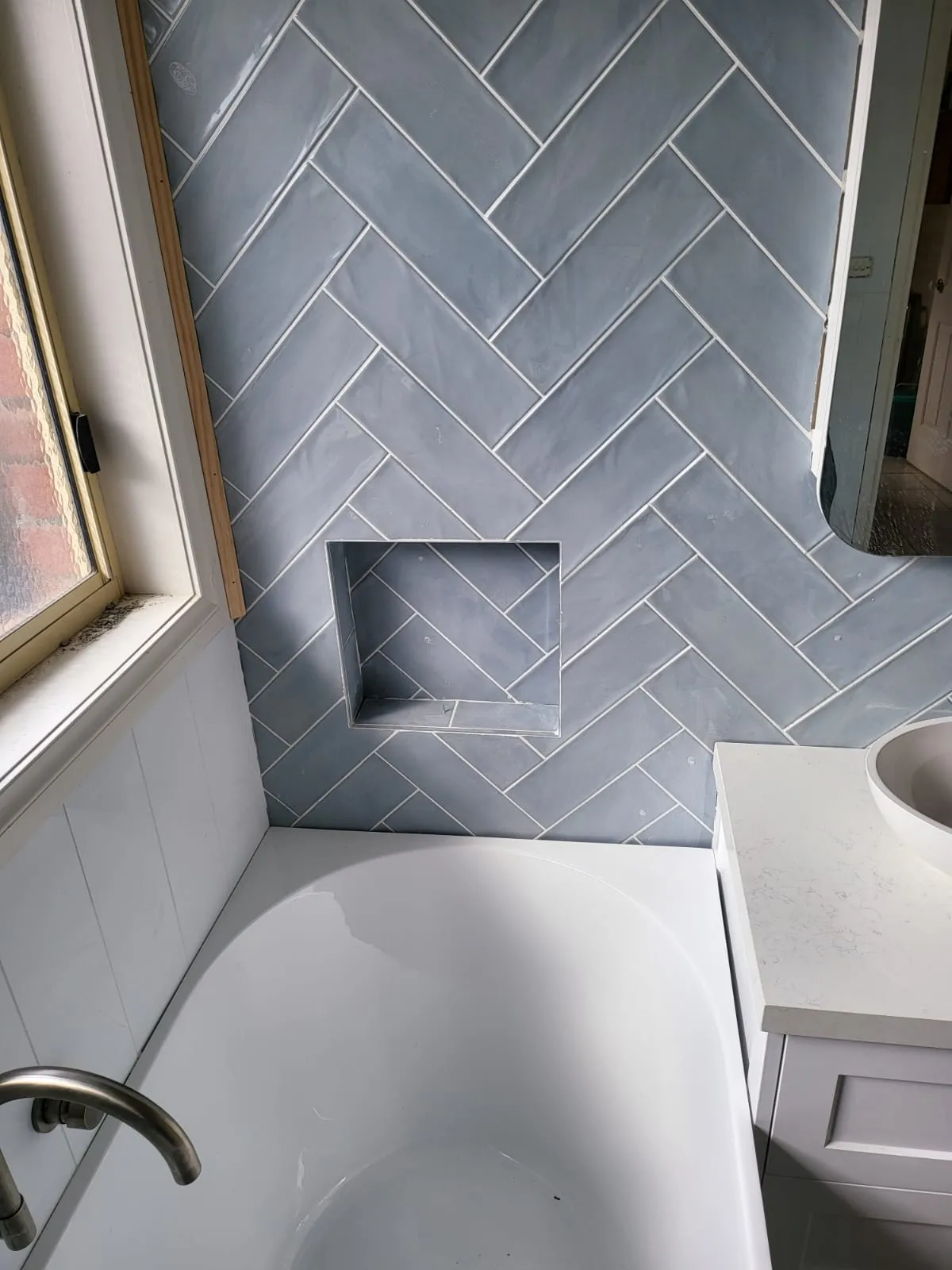
Herringbone feature wall

Laying the tiles on an angle, instead of in a straight line, gives the wall some texture and movement. It's why that wall is the first thing you notice walking in.

Floating double vanity

If two people use this bathroom each morning, having two basins makes a real difference. Nobody's waiting on anybody else to finish up.

Frameless shower

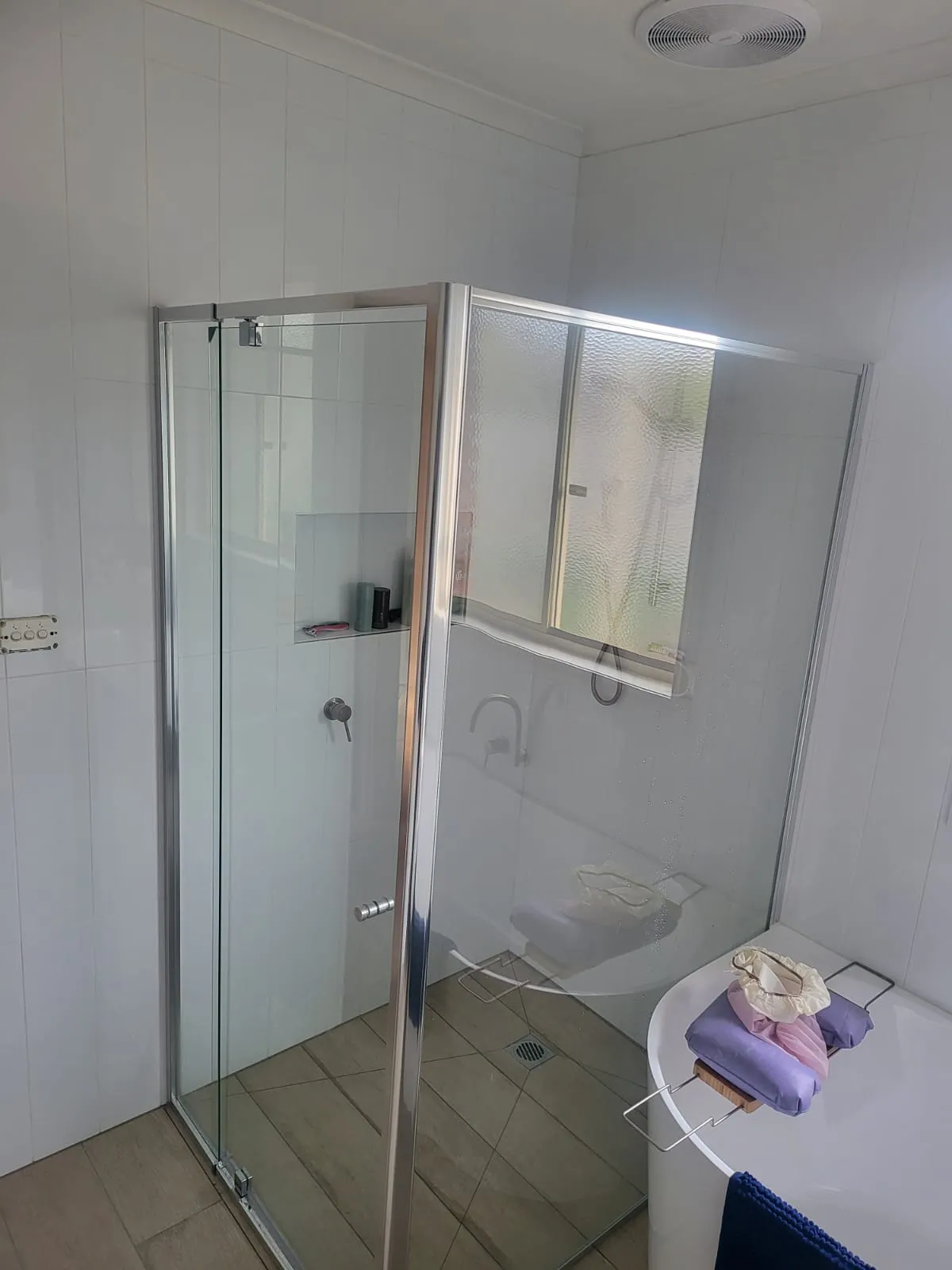
A normal shower screen has metal framing around the glass. Take that away, and light can move through the room instead of getting broken up. The whole bathroom feels bigger.

Freestanding bath

It sits against the feature wall instead of tucked into a corner. That makes it something you'd actually want to look at, not just something that's there because it has to be.

Built-in shelf

Tiled in the same pattern as the wall around it, so your shampoo and soap have a spot that doesn't break up the design. No hanging caddy needed.
ℹ️
Did You Know?

Taps mounted on the wall, instead of on the bath or vanity, have to go in exactly the right spot while the walls are still open. Once the tiles are up, there's no shifting them. It's one of those things that has to be planned early, not fixed later.

Before & After

Before & After

The before photos don't show an ugly bathroom. They show an empty one — bare frame, exposed pipes, chalk marks on the timber. It's not a pretty shot, but it's an honest one.

It shows the part of the job you'll never see again once the tiling's done.

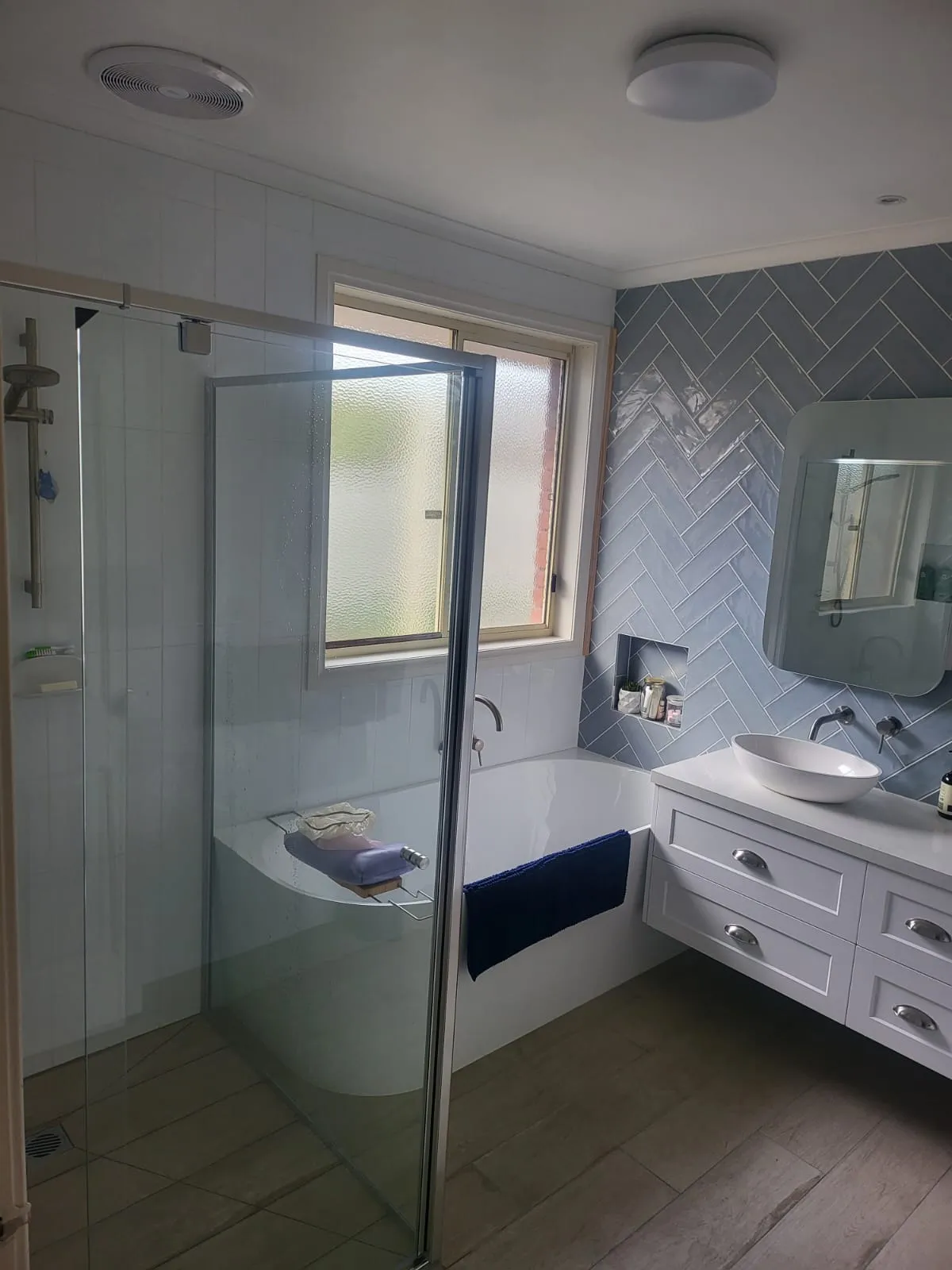
The herringbone wall and the freestanding bath are what catch your eye in the after photos. But none of that exists without what happened first — new plumbing, new wiring, and a proper waterproof layer, all done before a single tile went up.

Day to day, that shows up in small ways. No waiting on the basin in the morning. No dark corners. A shower and bath that each have their own space instead of fighting for it.

Finished Keilor East bathroom with herringbone tile wall, freestanding bath and floating vanity Stripped Keilor East bathroom showing exposed framing and plumbing rough-in Before After
Drag the slider to compare
Why This Bathroom Works

Why This Bathroom Works

You can tick every box on a feature list and still end up with a bathroom that feels a bit off. This one doesn't, and it comes down to a few simple choices.

Layout. The bath sits against the feature wall. The shower has its own corner. The vanity runs along the last wall. Nothing's fighting for space.

Light. There's a light in the ceiling and another over the shower. No dark corners — something you only really notice when it's missing.

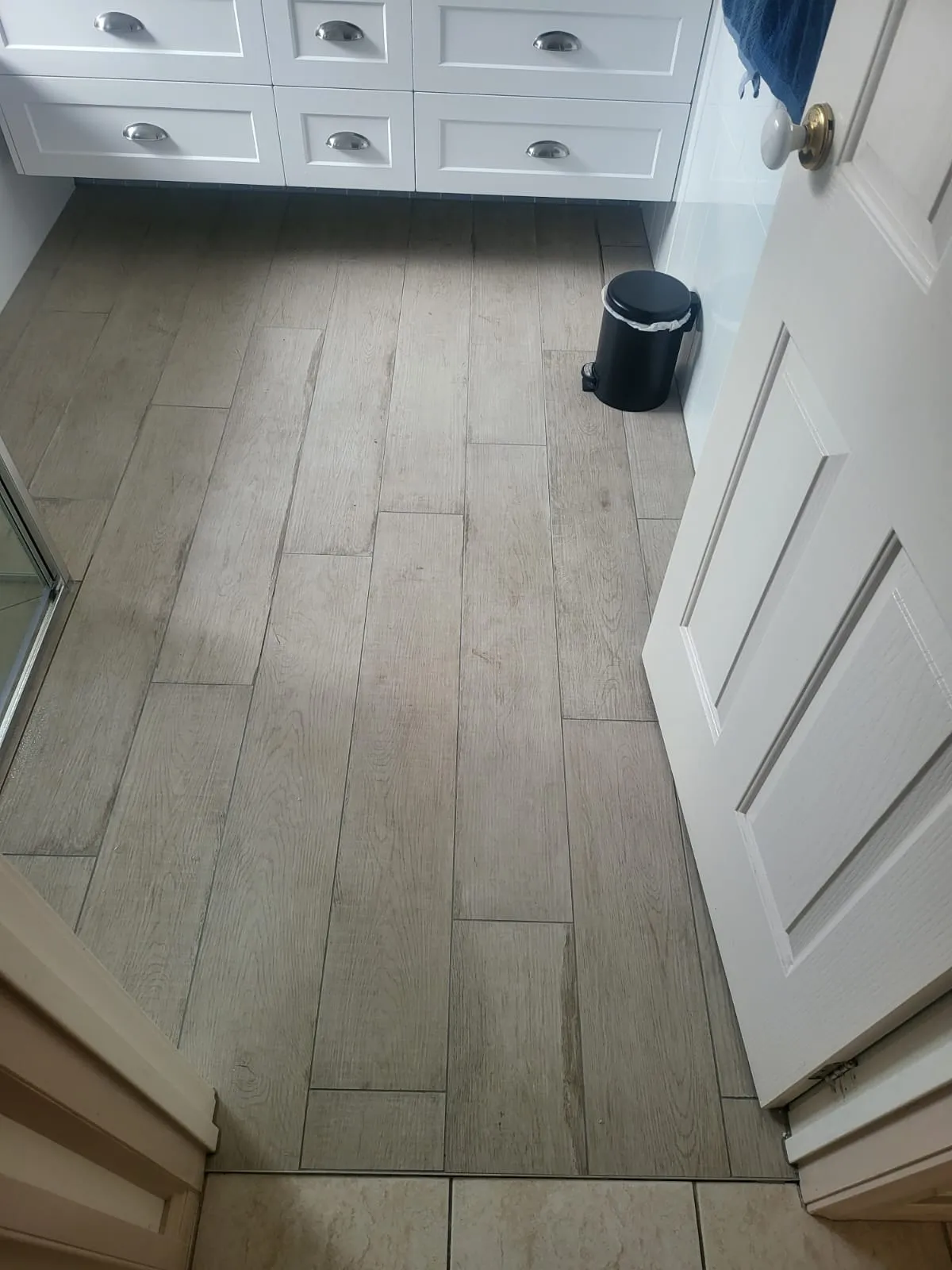
Colour. Most of the room is kept simple — white tiles, timber-look flooring. That's what lets the one bold choice, the blue-grey herringbone wall, actually stand out. Add a few more "feature" choices and none of them would.

Storage. If two people use this bathroom every morning, the double vanity makes a real difference. Each person gets their own basin and their own drawers, instead of waiting on the other.

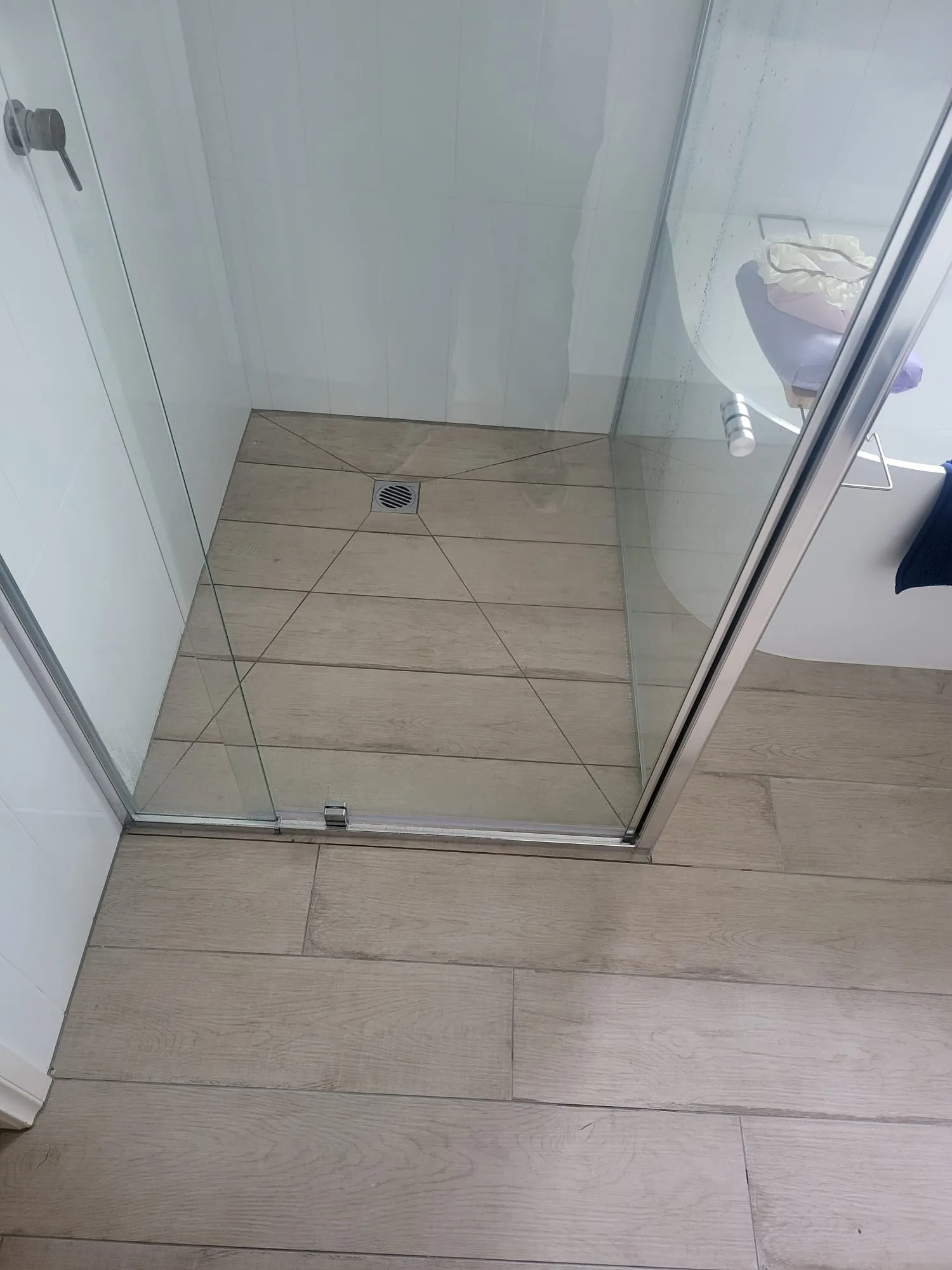
Upkeep. Big floor tiles and a frameless glass screen mean fewer grout lines to scrub, and no shower curtain or track collecting grime. Less time cleaning, more time using the room properly.

🏡
Everyday Benefit

Two people can get ready at the same time instead of waiting on one basin. A small change to the layout that pays off every single morning.

What Homeowners Can Learn

What Homeowners Can Learn

FAQs

FAQs

For this project, it took two weeks with a three-person crew. That covered demolition, new plumbing and wiring, waterproofing, tiling, and all the final touches.

If the wiring and pipes are original to an older home, yes. Tiling over them fixes the problem you can see, but leaves the bigger one exactly where it was.

Yes — this project's proof of that. It comes down to planning every fixture's position before the walls go back up, not adjusting things afterwards.

It does take longer than laying tiles in a straight line. But it gives you one genuine feature wall, instead of just another tiled one.

It really depends on the scope of work. A full rebuild like this one costs more than a surface refresh, because you're paying for new plumbing and wiring as well as the finishes. The best way to get an accurate figure is a quote based on your own bathroom and what you want done.

CTA

CTA

Start with a layout that actually works for your household. Invest in what's behind the walls. Choose finishes that'll hold up for years, not just look good for a season. If you're thinking about renovating, we're happy to talk through your ideas and explain what's involved — no pressure, no obligation.