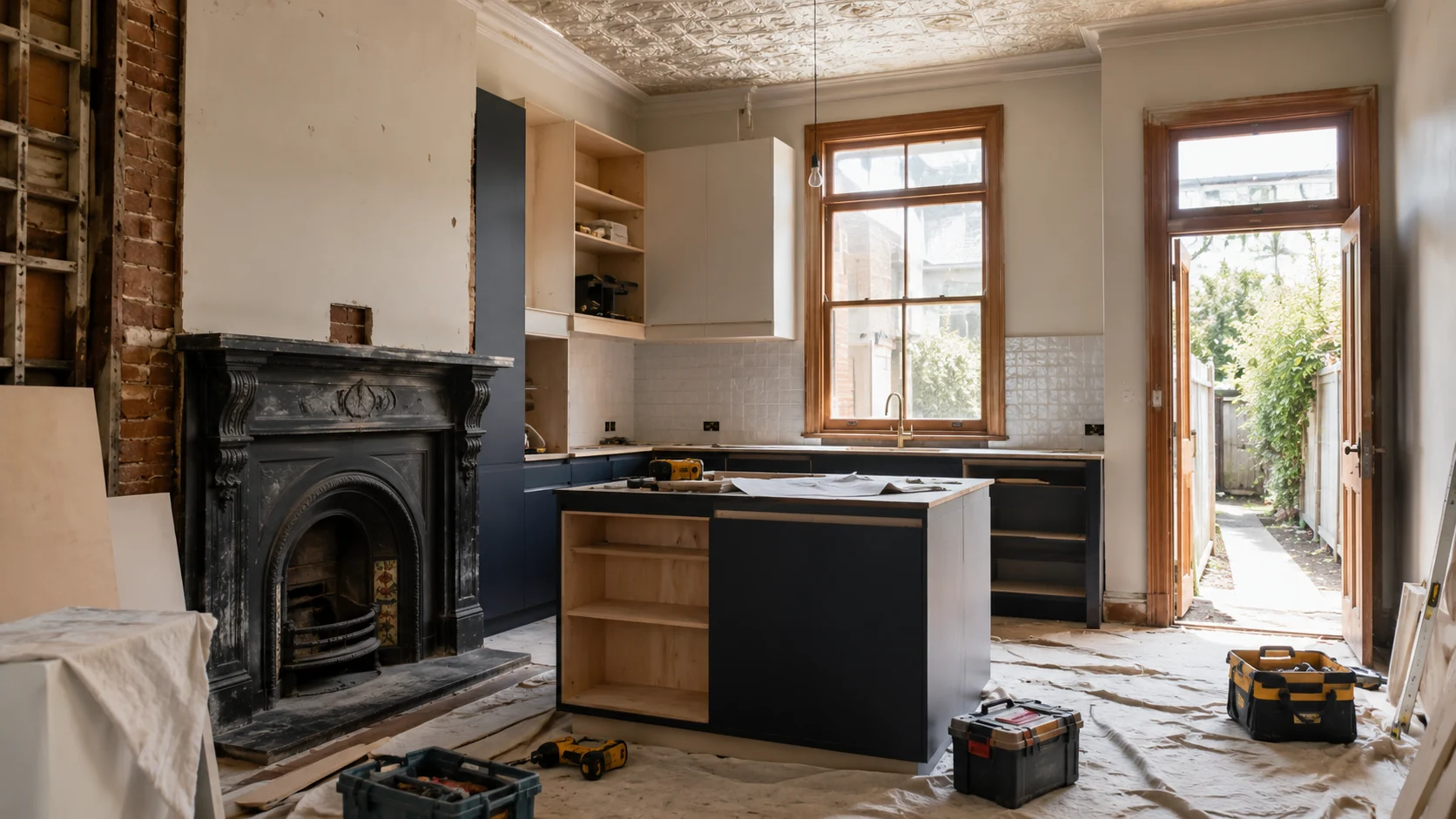
Victorian terraces and other period housing stock need a different renovation approach to a standard-age home, not because of style, but because of what's actually behind the walls. A kitchen renovation in a character property starts with understanding those differences. (For which aesthetic style suits a period home, see our Design Styles guide — this page covers the structural and technical side instead.) This comes up most often in Newtown's Victorian terraces, but the same structural considerations apply to the original weatherboard cottages still tucked among the newer builds you'll find on a kitchen renovation in Torquay. Character homes need a team that's handled these surprises before — this is one of the more specialised parts of any kitchen renovation Geelong period home actually requires.
The three things that most affect a period home kitchen renovation are asbestos and outdated services common in pre-1960s construction, heritage overlay planning controls where they apply, and preserving original features (cornices, fireplaces, window joinery) while updating the kitchen's function.
What's Different About Renovating a Period Home
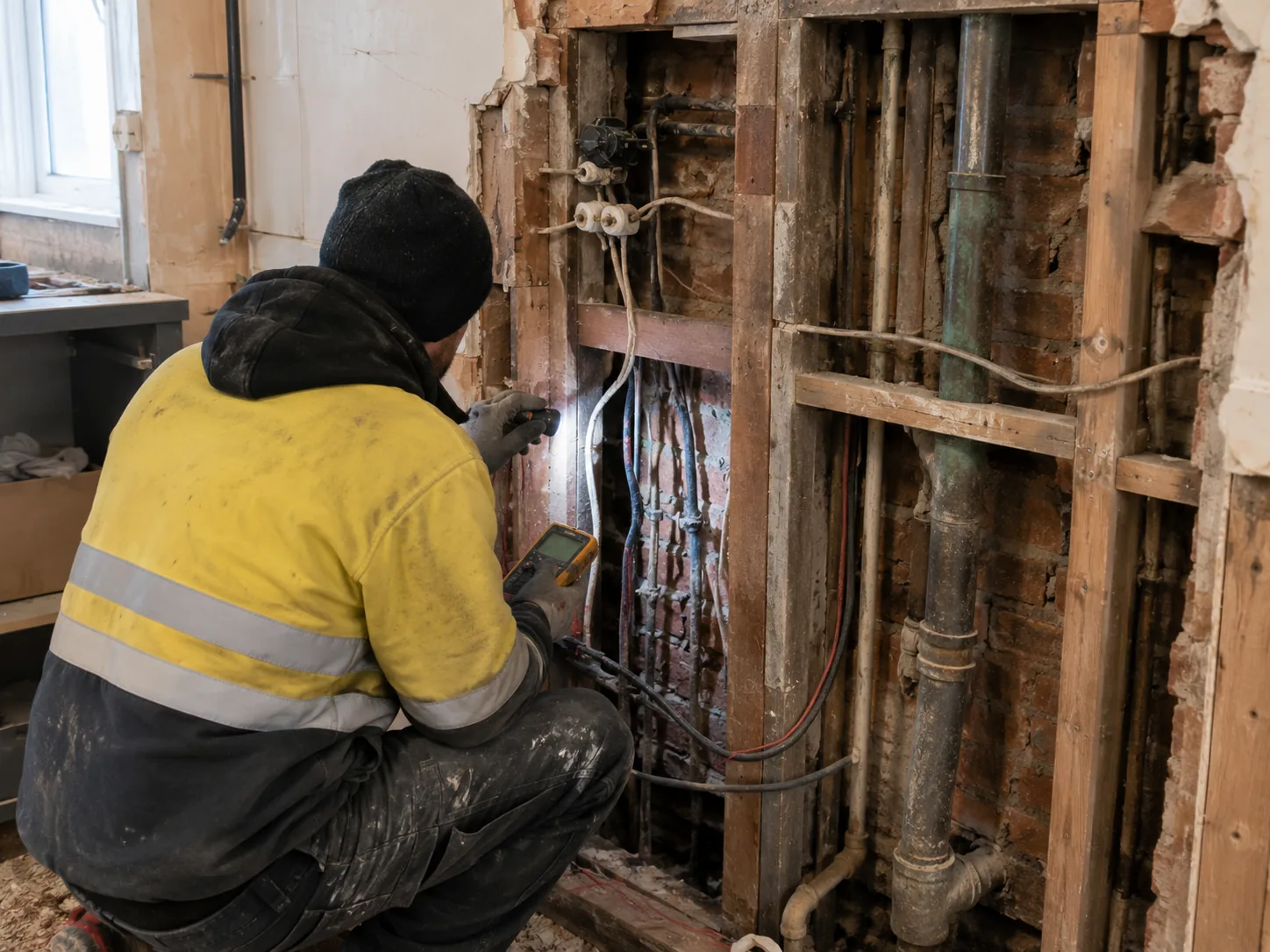
The design decisions in a period home renovation are rarely the hardest part. It's what gets discovered once demolition starts. Original wiring, non-standard plumbing, and asbestos-containing materials are common in pre-1960s housing, and a proper pre-renovation assessment avoids the most expensive surprises.
Heritage Overlay: A Separate Approval Process
If a property sits within a heritage overlay, kitchen renovations involving external changes or significant internal alterations may need a planning permit, a different, additional process to the standard building permit most kitchen renovations require. See our dedicated guide on heritage overlay planning permits for the full detail on when this applies and what it involves.
Preserving Character While Updating Function
Original Features
Cornices, fireplaces, window joinery and original door hardware are often worth retaining or restoring rather than removing.
Kitchen Function
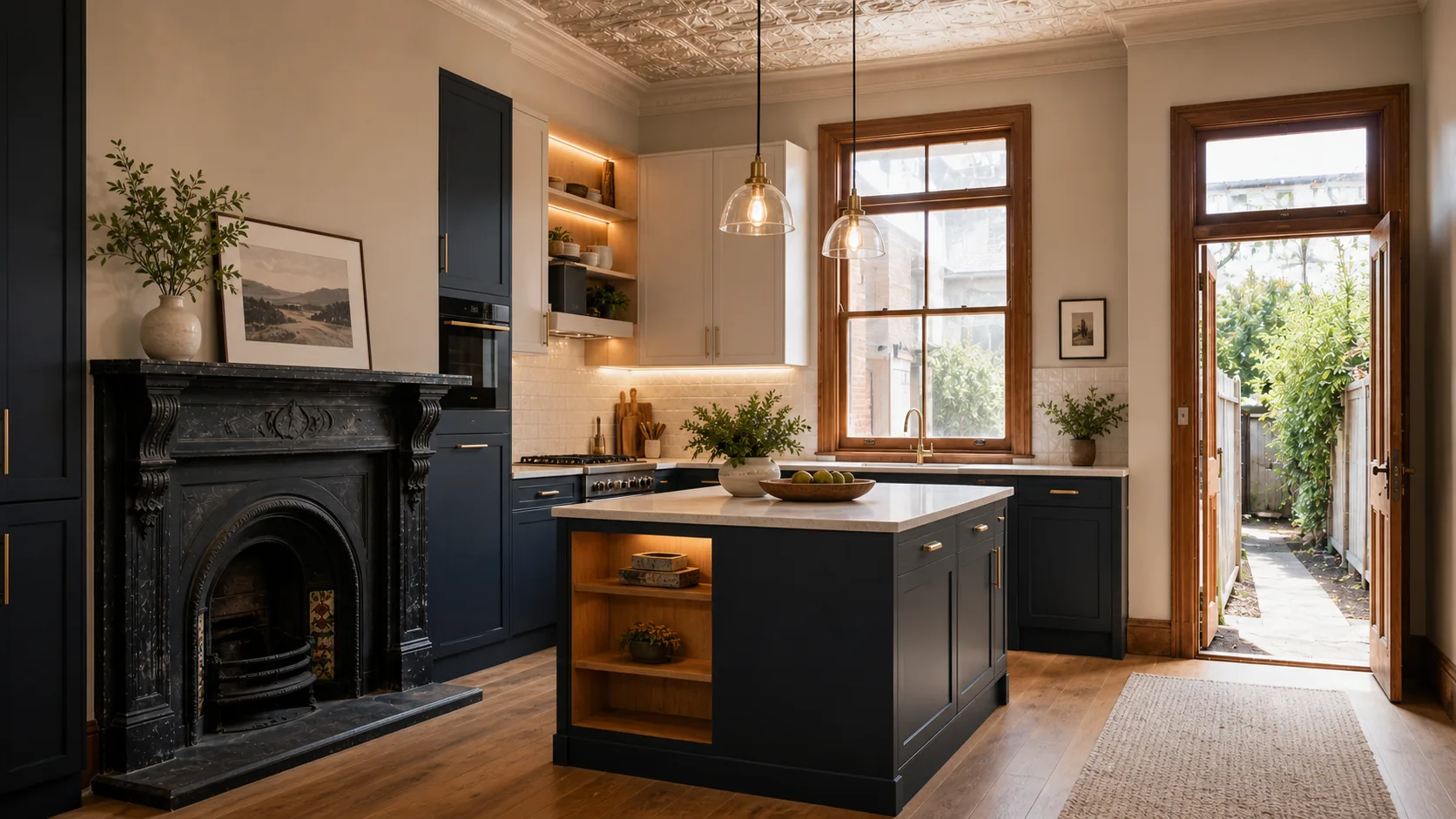
Layout, storage, services and surfaces can be brought fully up to date without disturbing the features that give the home its character.
Material Choices
A honed natural stone or matte porcelain finish tends to sit more comfortably alongside period features than a high-gloss engineered look.
See our Benchtop Materials Guide for more on material choices that suit a period aesthetic, and our Common Renovation Mistakes guide for the specific risk of designing before understanding a property's structural constraints.
Frequently Asked Questions
Do period homes need special consideration before a kitchen renovation?
Yes. Pre-1960s homes commonly have asbestos, original wiring and non-standard plumbing behind the walls, and may sit within a heritage overlay requiring planning approval. A proper structural and services assessment before design starts avoids the most costly surprises.
Will renovating my kitchen affect my period home's heritage status?
It depends on whether the property sits within a heritage overlay and what the renovation involves. Internal kitchen changes are often less restricted than external ones, but it's worth checking. See our Heritage Overlay Planning Permits guide.
Can I modernise a period kitchen without losing its character?
Yes. Layout, storage and surfaces can be fully updated in a kitchen remodel while preserving original features like cornices, fireplaces and window joinery. Material choices that complement rather than compete with the home's original character make the biggest difference.
Where heritage overlays or planning permits are involved, not every Geelong kitchen renovation team has genuine heritage-property experience — it's worth asking directly before you commit.
Renovating a Period Home Kitchen?
We're happy to assess your property and talk through what to plan for before design begins.
Get a Free Quote