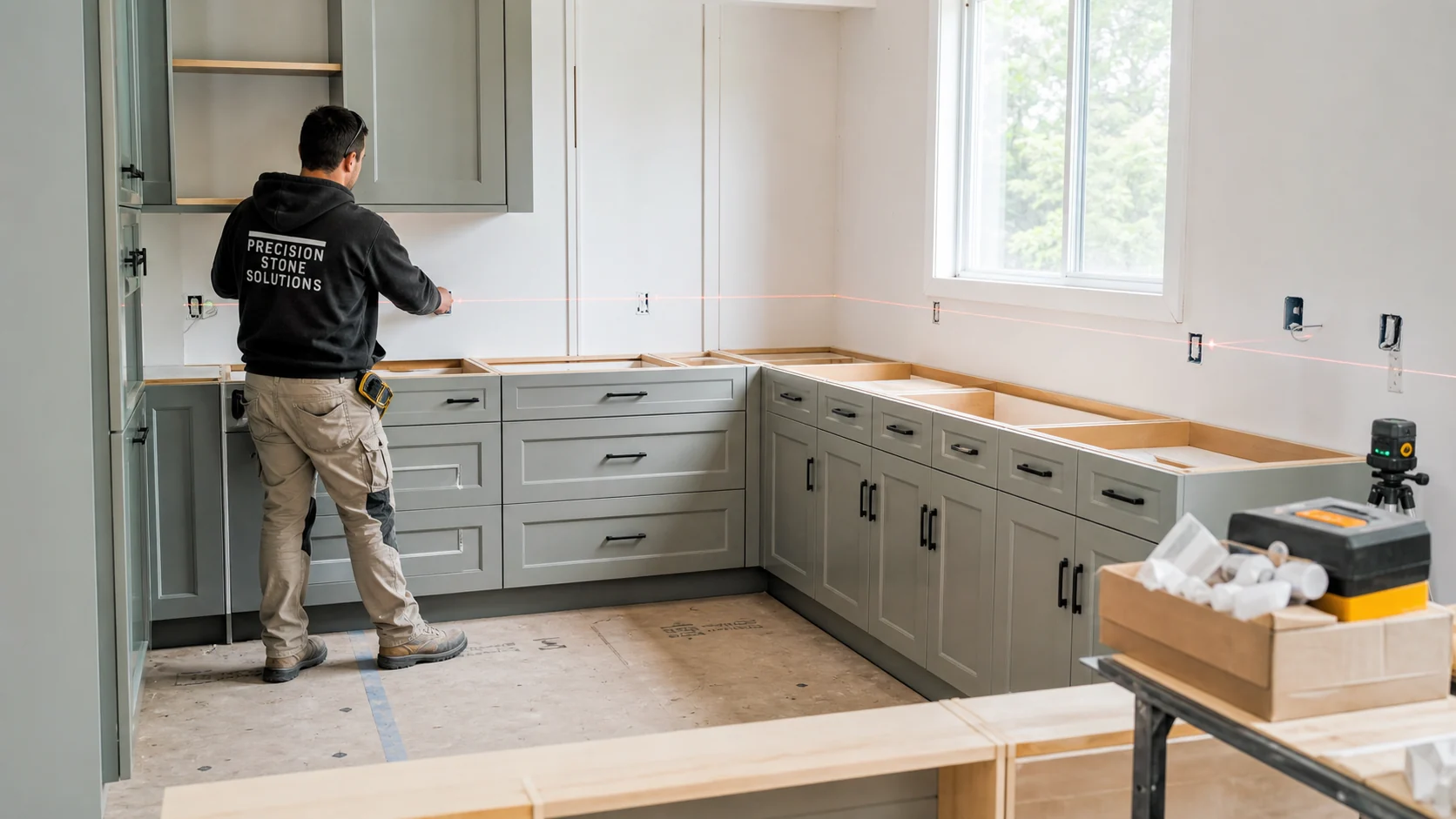
Two different questions get asked about a kitchen renovation: how long does it take, and what actually happens. Our Timeline guide answers the first, phase by phase, week by week. This guide answers the second: what each phase actually involves, so you know what to expect and what decisions you'll need to make along the way. If you'd rather have someone run this for you, treating it as a properly managed kitchen renovation project from day one is what keeps every phase described below on track.
A standard kitchen renovation moves through design and documentation, demolition, rough-in trades, cabinetry install, benchtop templating and install, then splashback and finishing. Each phase has its own decisions and dependencies, covered in the breakdown below.
The Six Phases of a Kitchen Renovation
Design & Documentation
Layout finalised, materials selected, cabinetry measured and ordered. Decisions made here are the hardest to change later.
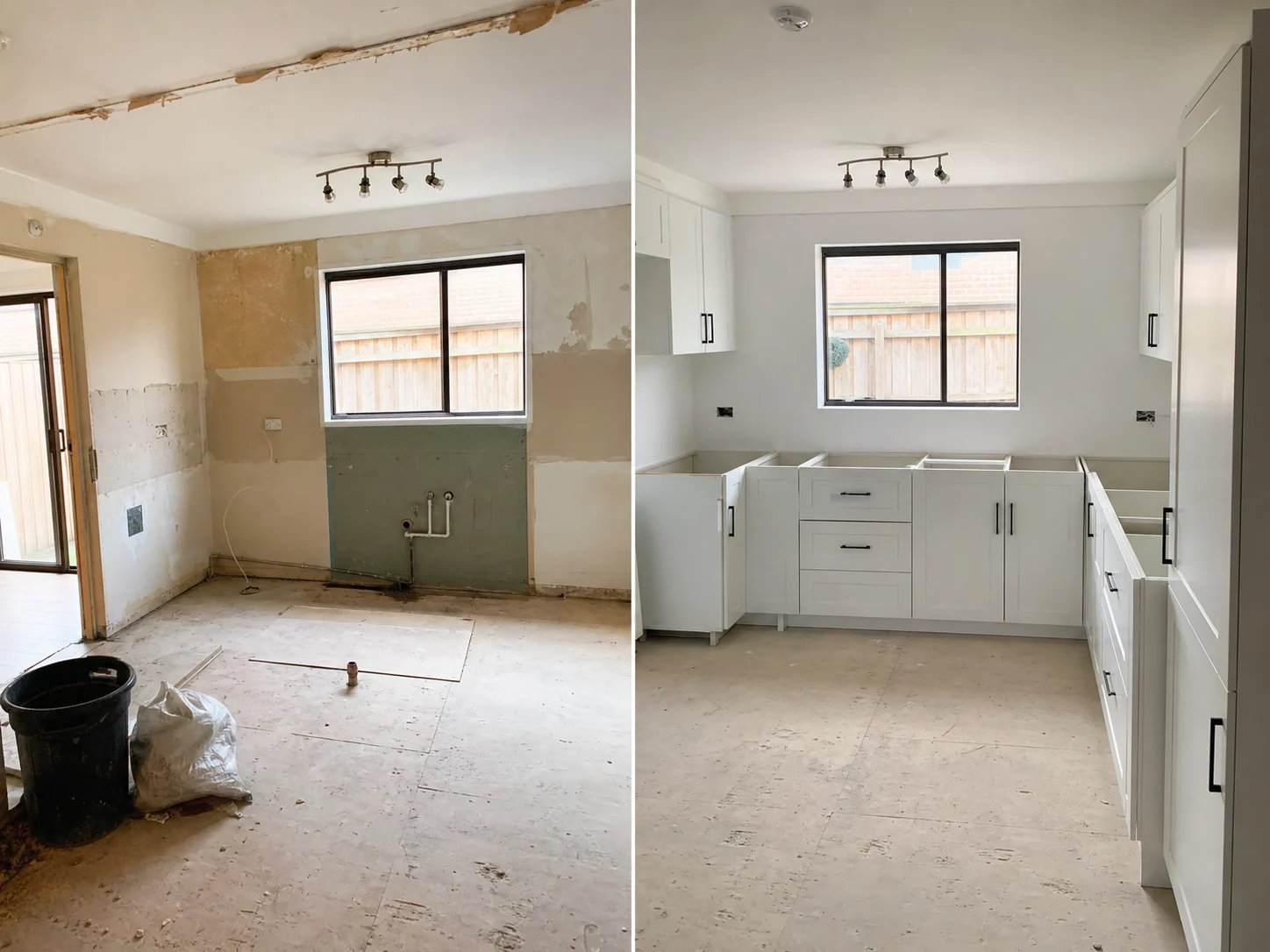
Demolition & Prep
Old cabinetry, benchtop and fixtures removed. Older homes often reveal structural or services surprises at this stage.
Rough-In Trades
Plumbing, electrical and any structural work completed before cabinetry goes in. Any layout changes happen here.
Cabinetry Install
Cabinets are installed to the finished floor and walls. Custom joinery arrives on its own lead time, so ordering early matters.
Benchtop Template & Install
Benchtops are templated only once cabinetry is in place, then fabricated and installed. This step can't be rushed.
Splashback & Finishing
Splashback, appliances, tapware, lighting and final trades. A snag list and clean-up close out the project.
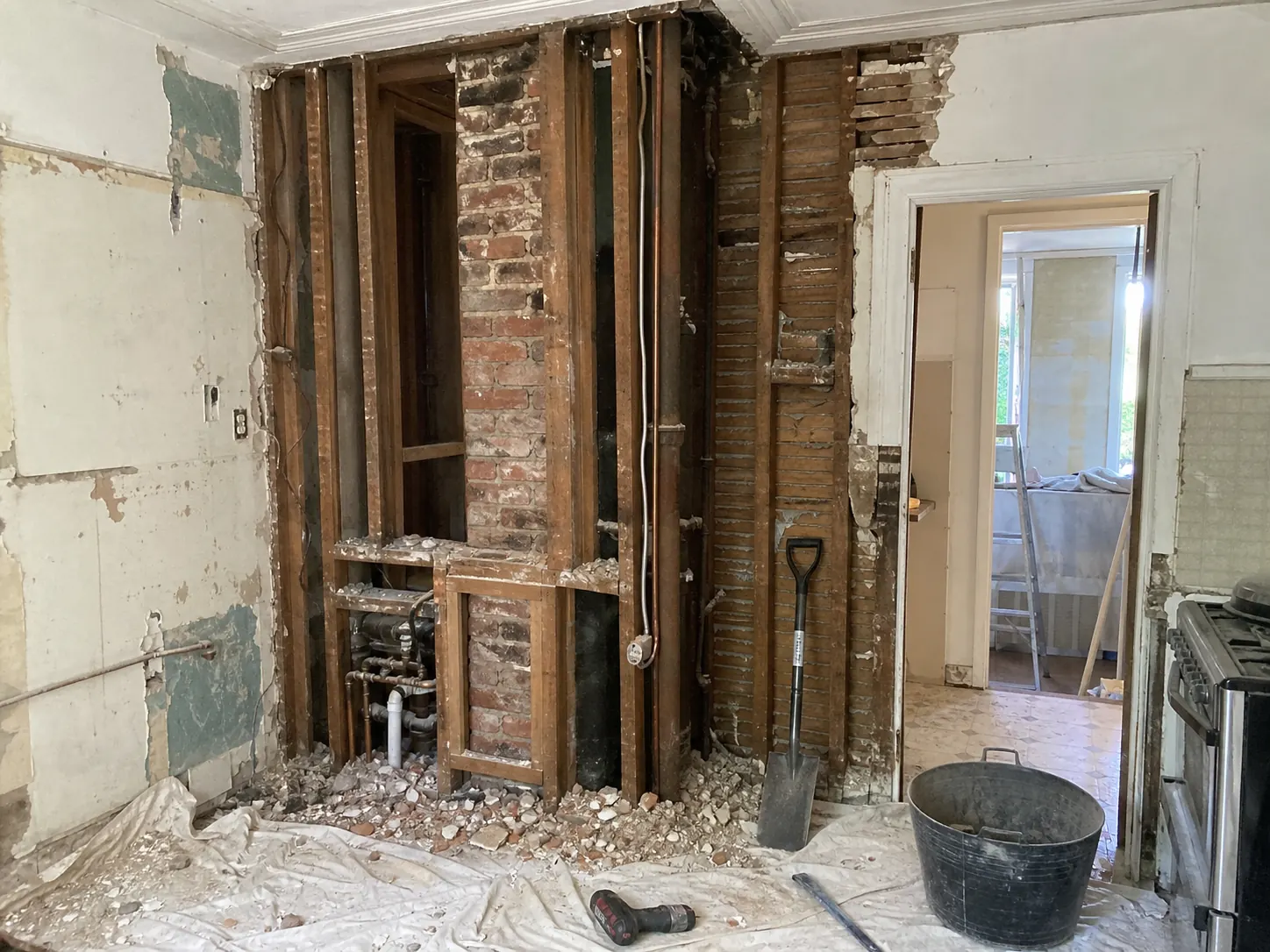
Where Older Homes Add Time
For a kitchen renovation in Newtown, Phase 2 (demolition) is where the process most often reveals something the design phase couldn't have accounted for: original services, structural elements behind plaster, or heritage features worth preserving. Building this contingency into the plan from the start, rather than reacting to it mid-project, is what keeps a character-home renovation on track. See our guide to renovating a period or character home.
Frequently Asked Questions
What is the first step in a kitchen renovation?
The first step is design and documentation: finalising the layout, selecting materials, and getting cabinetry measured and ordered. This phase has the longest lead time and the decisions made here are the most expensive to change later.
When does benchtop installation happen in the process?
Benchtops are templated after cabinetry is installed, not before. The benchtop fabricator needs the exact finished cabinet dimensions to template accurately, which is why this step follows cabinetry install rather than happening earlier.
How long does each phase of a kitchen renovation take?
Phase durations vary by project scope. See our dedicated Timeline guide for a full week-by-week breakdown from first consultation to handover.
For larger or more complex jobs, our kitchen remodeling services include a single point of contact from first consult through to handover.
Ready to Start Planning?
Whether you're at the design stage or ready for quotes, we're happy to walk you through what's involved for your specific property.
Get a Free Quote