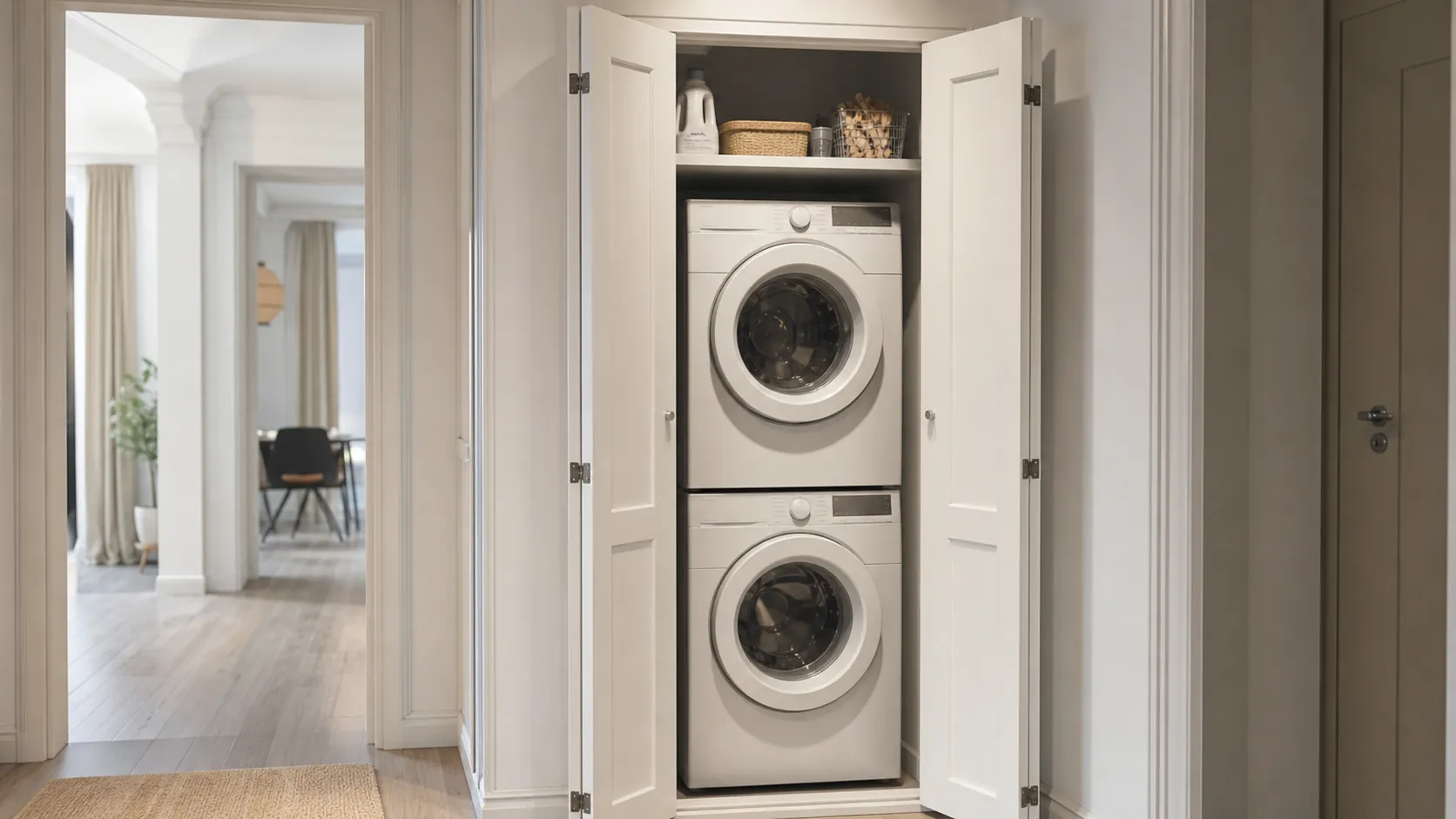
A European laundry is a laundry built into a cupboard or alcove, usually closed off with doors, rather than in a separate room. Making it work comes down to the door type, stacking or side-by-side machines, ventilation for heat and moisture, and whether there's room for a small trough.
The best ideas are about how the space works day to day. European laundries are common in apartments, townhouses and renovated homes where a separate laundry room was traded for living space. The constraints are real, but so are the options.
Compact cupboard laundries are a regular part of our laundry room renovation services in Geelong, and the same few decisions come up every time.
Separate laundry vs cupboard-style laundry
| Factor | Separate laundry | Laundry cupboard |
|---|---|---|
| Space | A room, often with bench and storage | One wall or alcove behind doors |
| Machines | Side by side or stacked | Usually stacked, or side by side under a short bench |
| Trough | Standard or large | Compact or inset, if space allows |
| Ventilation | Room air and often a window or fan | Needs planning, especially with doors closed |
| Noise | Contained by the room | Heard in the adjoining living space |
Doors: bi-fold, sliding or none
The door choice decides how much of the laundry you can reach at once and how much floor space in front of it must stay clear.
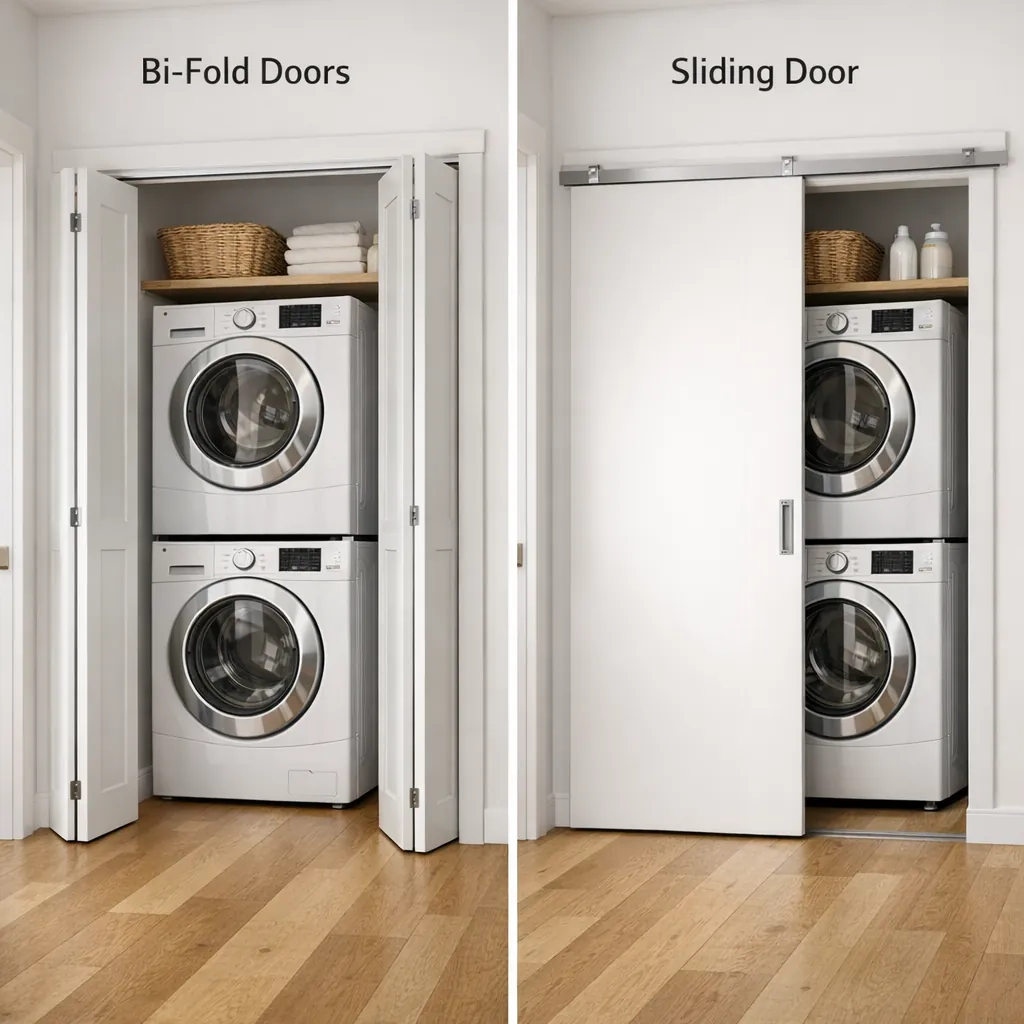
- Bi-fold doors open the full width while folding back into a small space, but still need some clear floor in front.
- Sliding or cavity doors need no swing space but may only expose part of the width at a time, unless they slide into a wall cavity.
- Hinged doors are simple but need the most clear floor.
- No doors suits laundries in a utility corridor, but leaves machines and clutter visible.
Stacked or side by side in a cupboard
Stacking is the most common choice in a compact laundry because it uses height rather than width. Side by side under a short bench works where the cupboard is wide enough.
Stacking needs a front-loading washer and a dryer suited to stacking, plus enough height for both machines and access to the upper controls. The machine choice affects the whole cupboard, so settle the top loader or front loader choice first if you're replacing machines.
Moisture, heat and ventilation
An enclosed cupboard traps heat and moisture from the dryer, so plan how that air will escape before the doors are chosen.
Dryer types handle moisture differently. A vented dryer pushes moist air out and needs somewhere for it to go; condenser and heat-pump dryers collect water internally but still release heat. Check the manufacturer's installation requirements for the dryer you'll use, including any clearance and ventilation needs in a cupboard. Doors with ventilation openings, or an exhaust fan, may be part of the answer.
A trough, a small sink, or nothing?
A house needs at least one washtub, with space in the same room for a washing machine, and a kitchen sink or basin doesn't count as the washtub (ABCB).
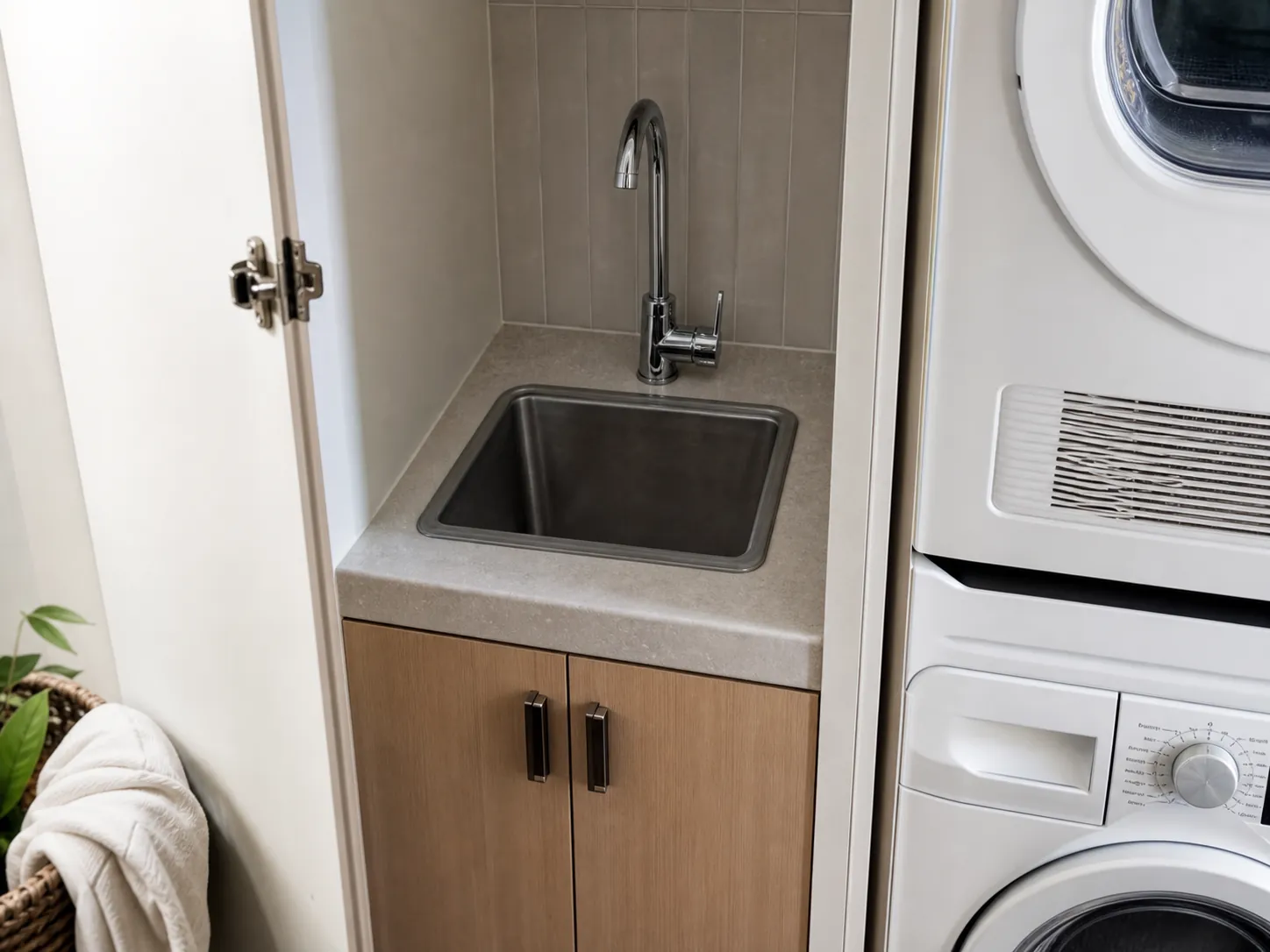
Homeowners renovating micro laundries often ask whether a smaller sink will do. A compact or inset trough is usually the way to keep a washtub without losing the bench in a cupboard. Compact and inset troughs suit most cupboards. How the rule applies to a particular alteration is a question for a building surveyor.
Storage above and beside the machines
Use the space above stacked machines, and any narrow gap beside them, for the items you use every wash.
A shelf or cupboard above the machines suits detergent and pegs; a narrow pull-out beside them can hold cleaning products. Tall items like the broom usually need a separate cupboard nearby, planned with the rest of your laundry storage.
Extending or relocating a cupboard
Extending a cupboard laundry into an adjoining space is sometimes possible, but it can involve walls, plumbing, electrical and wet-area work, so it needs an on-site assessment.
Homeowners considering this often ask how complex and costly it will be. The answer depends on what's on the other side of the wall, where the waste can run and whether the floor needs to be treated as a wet area. If you're weighing up an extension, our laundry renovations Geelong page explains how we assess and scope that kind of work.
Related guides
Frequently Asked Questions
What is a European laundry?
A laundry built into a cupboard or alcove, usually behind doors, rather than a separate room. It's also called a cupboard-style laundry or concealed laundry.
Does a European laundry have a dryer?
It can. Dryers are usually stacked above a front-loading washer. Plan how heat and moisture escape, and follow the dryer manufacturer's installation requirements.
How much space do you need for a European laundry?
Enough for your machines, stacked or side by side, plus their installation clearances, the door swing or slide, and room to stand in front. Measure your machines first rather than working from a standard size.
Making a cupboard-style laundry work?
From bi-fold doors to stacked machines and extensions, we'll assess what your laundry cupboard can become.
Arrange a consultationSources
General information, not advice for a specific property. Requirements depend on the building, the work and the current NCC edition.