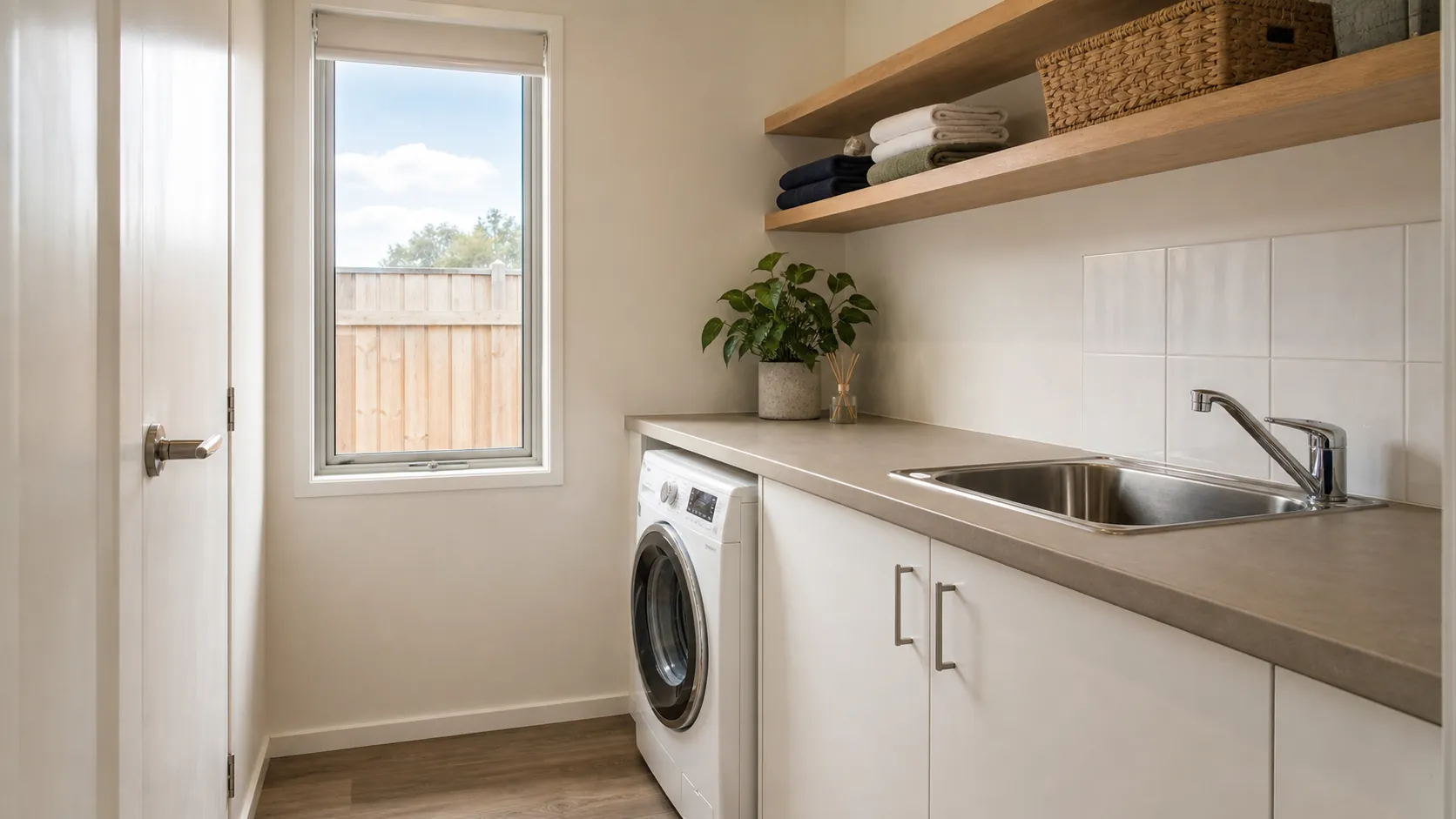
The biggest savings in a renovation usually come from keeping the plumbing and walls where they are, choosing standard-size or semi-custom cabinetry, and keeping appliances that still suit the layout. Wet-area work and moisture-resistant materials are where cutting cost tends to create repairs later.
A laundry renovation on a budget doesn't have to look cheap. It's one where the money goes into the parts that are expensive to redo, and the savings come from decisions that don't compromise how the room works.
It's the same approach our laundry renovation specialists in Geelong use when pricing options side by side for a fixed budget.
As a guide, a simple laundry update starts from around $5,000, and a smaller renovation is typically around $7,000. The final price depends on the job. Most of the difference comes from a handful of decisions, not the size of the room.
Start with the problem you're fixing, not the finish you want
Write down what isn't working before choosing anything. If the layout already works, a refresh in the same positions is usually the most cost-effective path.
Many frustrations (no folding space, nowhere for the broom, cluttered benches) can be solved with better storage and a new benchtop in the existing layout. Problems like a dryer door that can't open fully or a trough in the wrong place may need the layout to change, which is where costs rise.
Is a laundry makeover enough?
A makeover keeps the existing layout and replaces what you see: cabinet doors, or cabinets in the same positions, the benchtop, tapware, splashback and paint. It's usually enough when the room works but looks tired or lacks storage.
A makeover won't fix a layout problem, such as machines that don't fit or a trough in the wrong place. If the old cabinets or floor show water damage, deal with that first rather than covering it with new finishes.
Makeover ideas that keep the layout
- New cabinet doors and handles, or new cabinets in the same footprint
- A new benchtop, with laminate as the lower-cost option
- A new trough and tapware in the existing position
- A tiled splashback behind the trough and bench
- Overhead cupboards or shelving above the machines
- Better lighting and an exhaust fan
The decisions that actually change the cost
These are the choices that most affect the price of a renovation, and when spending more on each one is worth it.
| Decision | Lower-cost choice | When spending more is worth it |
|---|---|---|
| Plumbing position | Keep taps, waste and trough where they are | When the existing position stops the layout working |
| Walls and openings | Keep the existing door and wall positions | When circulation or appliance access is genuinely blocked |
| Cabinetry | Flat-pack or semi-custom in standard sizes | Odd-shaped rooms where standard modules waste space |
| Benchtop | Laminate or compact laminate | Where the bench takes heavy wear or you want a trough inset |
| Appliances | Keep machines that suit the new layout | When the machine type is what's forcing a poor layout |
| Tiles | Standard tiles over a limited area | Where a larger splashback protects walls near the trough |
| Dimensions | Design to standard cabinet widths | When a custom width recovers usable storage |
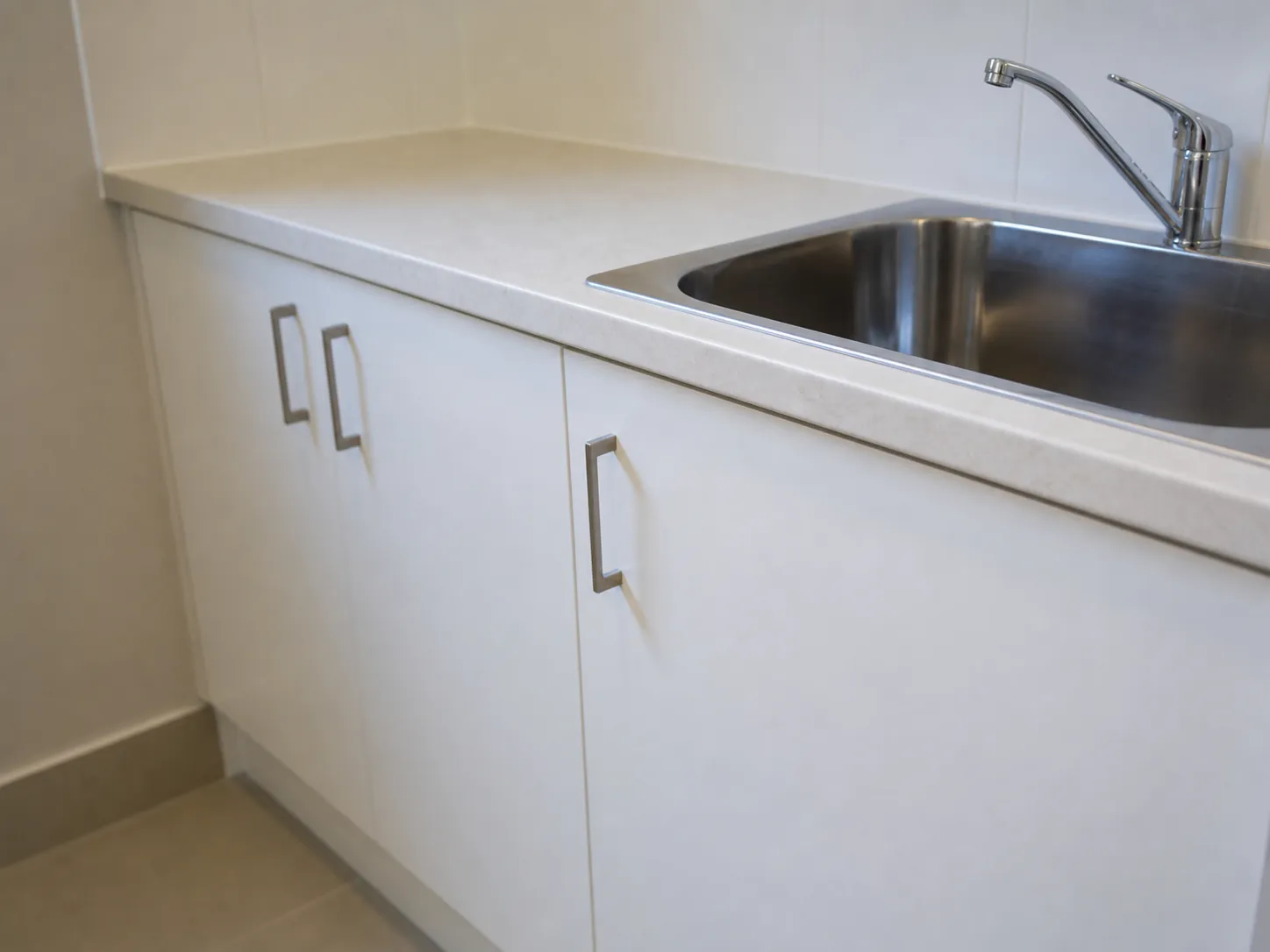
Cabinetry is usually the biggest of these choices: custom, semi-custom and flat-pack cabinetry each suit different rooms, and benchtop materials vary just as widely in cost. If you're unsure whether your plumbing can stay, check when moving the plumbing is worth it.
Where cutting costs usually backfires
Savings on moisture protection, licensed work and ventilation are the ones most likely to cost more later.
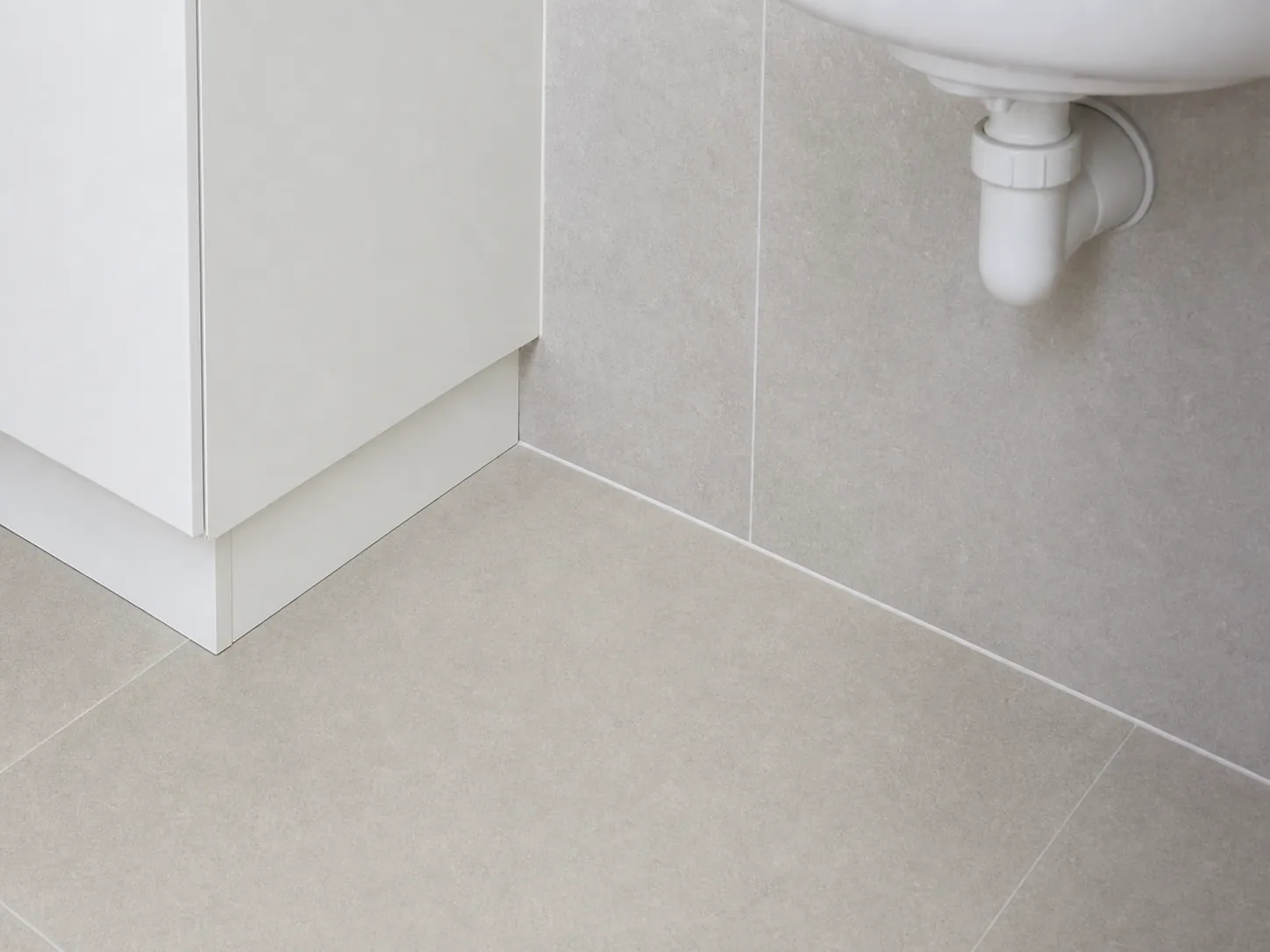
- Cabinet carcasses near water. Bases next to the trough and under the machines take splashes and leaks. Materials that swell when wet are a common early failure point.
- Floor and wall junctions. Under the National Construction Code, a laundry floor and the junction between floor and walls must be water resistant as a minimum (ABCB Housing Provisions). Skimping here risks water reaching the structure or adjoining rooms.
- Licensed work. Plumbing and electrical work need licensed trades. Work that isn't certified can create problems when you sell or insure the home.
- Ventilation. A laundry without adequate airflow can develop damp and mould, especially with a dryer.
Doing it in stages
If the budget doesn't stretch to everything now, do the work behind the finishes first and upgrade finishes later.
Plumbing, electrical and wet-area work are disruptive and expensive to redo once cabinetry and tiles are in. Getting those right in the first stage means a benchtop, cabinet doors or extra storage can be upgraded later without pulling the room apart.
Which jobs you can take on yourself
Some homeowners reduce cost by doing painting, removal of loose items or flat-pack assembly themselves. Plumbing and electrical work can't be done this way in Victoria. It helps to know which laundry jobs you can do yourself before you start.
Getting a quote that shows the options
Ask for key choices to be priced as options, so you can see exactly what each decision costs.
For example, the same layout priced with two cabinetry types, or with and without a relocated trough. That makes it clear where your money is going. Our laundry room renovation services in Geelong start with this kind of itemised scope.
Related guides
Frequently Asked Questions
How to cheaply renovate laundry?
Keep the plumbing, walls and door where they are, choose standard-size or semi-custom cabinetry and a laminate benchtop, and keep machines that suit the layout. Spend on moisture protection and licensed work.
How to renovate a laundry on a budget?
Fix the problems that matter first, keep services in place, and price key choices as options so you can see what each one costs. Do the work behind the finishes first and upgrade finishes later if needed.
Can you update a laundry for around $5,000?
Often, if the layout and plumbing stay where they are. Simple updates start from around $5,000; what that covers depends on your room, so it's confirmed in your itemised quote.
Working to a fixed budget?
We can price the key choices as options, so you can see what each decision costs before you commit.
Get options pricedSources
- Building and Plumbing Commission: engaging a builder
- Building and Plumbing Commission: plumbing insurance and compliance certificates
- ABCB Housing Provisions, Part 10.2 Wet area waterproofing
General information, not advice for a specific property. Requirements depend on the building, the work and the current NCC edition.