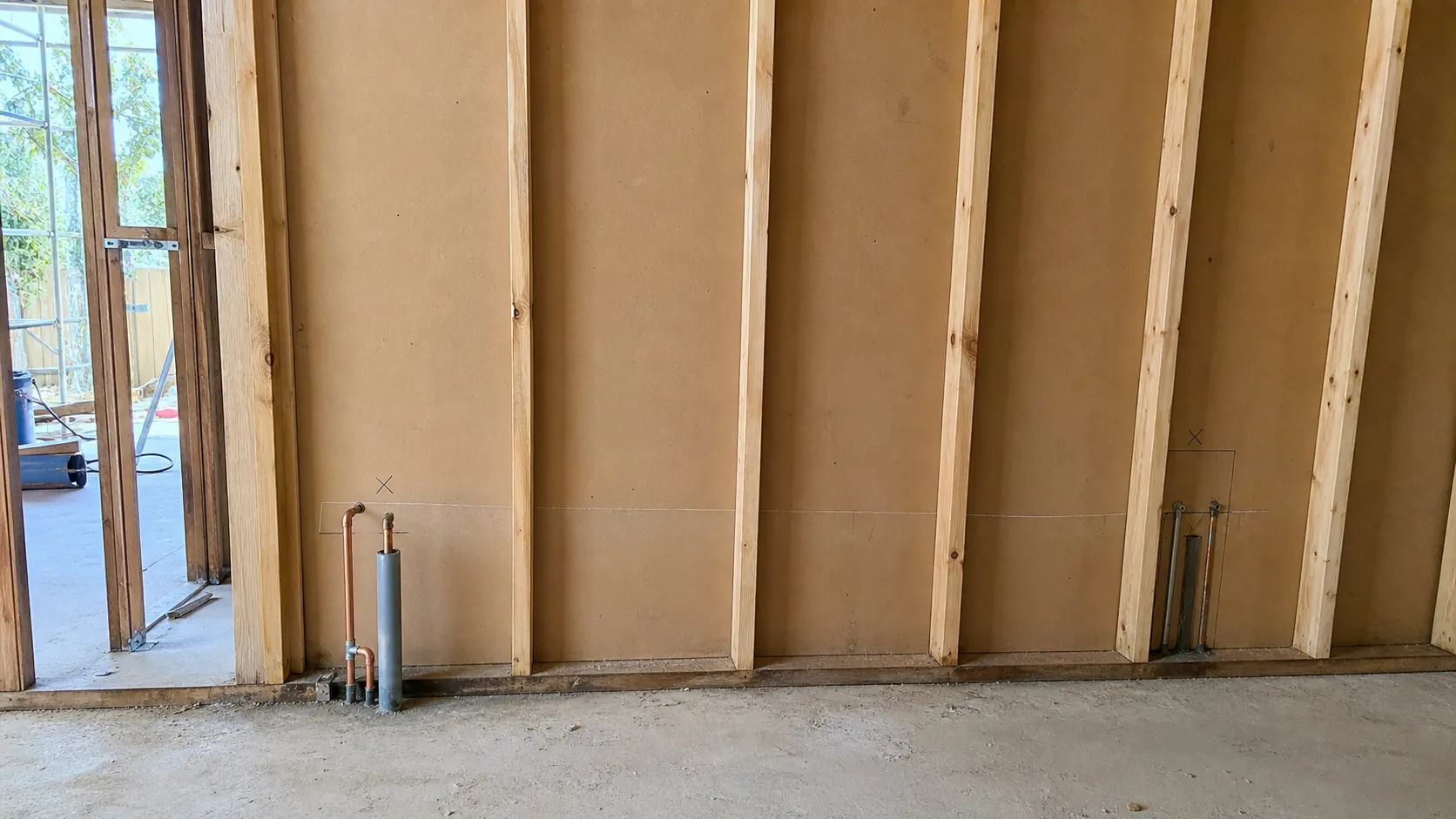
Move the plumbing only if the existing tap and waste positions stop you getting a workable layout. Relocating services adds plumbing work and can involve the floor, especially on a concrete slab, so confirm what's possible on site before the cabinetry is designed.
In a laundry, the plumbing position quietly decides a lot: where the trough goes, where the washing machine sits, and therefore where the bench and storage can be. That's why homeowners renovating small laundries so often end up asking whether the plumbing can move.
Plumbing position is assessed on site as part of our Laundry Renovations Geelong service, because it decides which layouts are possible.
When keeping the existing plumbing makes sense
Keep the plumbing where it is when a good layout already works around it, or when the gain from moving it is small.
- The trough and machine positions already allow a usable bench and storage
- The problems you're fixing are storage, finishes or bench space, not positions
- The budget is tight and the money is better spent on cabinetry or wet-area work
When moving it may improve the layout
Moving the plumbing is most worth considering when the current positions block a better layout outright, not just make it slightly less convenient.
- The trough sits where the only continuous bench could go
- The machines can't be stacked or placed under a bench because of where the taps are
- A door or dryer door can't open fully in the current arrangement
- The laundry is being combined with, or converted from, another room
Keep or relocate: the trade-offs
| Factor | Keep existing plumbing | Relocate plumbing |
|---|---|---|
| Layout freedom | Limited to positions that suit the services | More options for machines, trough and bench |
| Plumbing work | Disconnect and reconnect | New pipework, possibly through the floor or walls |
| Floor and walls | Usually untouched | May need opening up and making good |
| Wet-area work | Existing extent | May extend to new areas |
| Effect on price | Usually lower: reconnection only | Higher; depends on how far the services move and the floor type |
What moving laundry plumbing involves
To relocate the plumbing, a plumber usually runs new hot and cold supply to the new tap positions and a new waste route from the trough and washing machine to the drain.
Supply pipes are generally easier to reposition than waste pipes, because waste has to run downhill to the drain. How far the waste can move, and along what route, is usually the deciding factor. Homeowners sometimes ask whether plumbing can be run below bench level to free the wall; that's a question for the plumber on site.
Slab vs suspended timber floor
The floor type has a large effect on how easily plumbing can move.
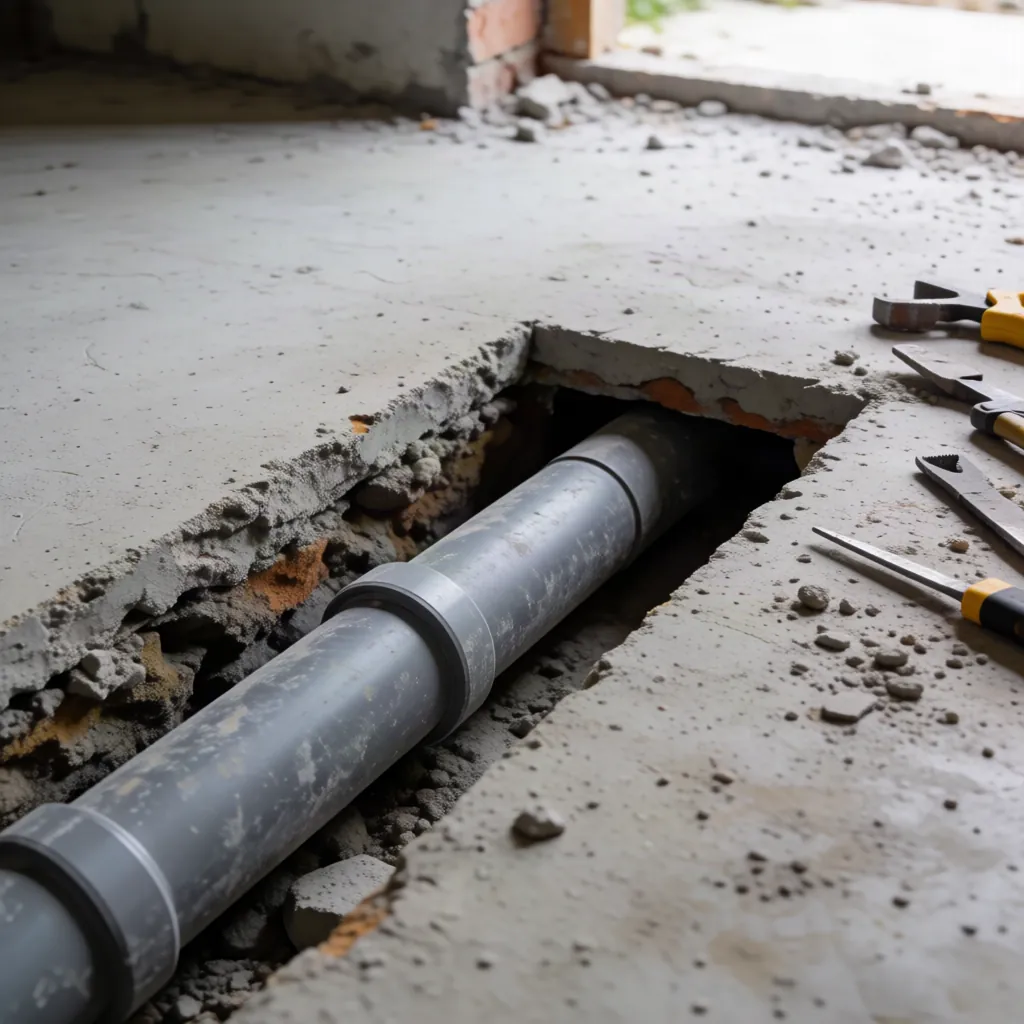
With a suspended timber floor, a plumber can often reach pipework from underneath. With a concrete slab, moving a waste may mean cutting into the slab. Neither rules a move out, but they change the work involved, which is why an on-site check comes before a layout is finalised.
How plumbing position shapes the cabinetry
Once the plumbing positions are fixed, they set where the trough cabinet, machine opening and access points go, so plumbing should be decided before cabinetry is measured.
Taps and waste need to stay accessible for repairs and machine changes. If plumbing moves after cabinetry is designed, the cabinetry usually has to change too. If you plan to move the laundry trough, weigh up the trough options at the same time.
Licensing and compliance in Victoria
In Victoria, plumbing must be done by a licensed plumber, or a registered plumber working under a licensed plumber's supervision.
- A licensed plumber must issue a compliance certificate for plumbing work valued at $750 or more, and the certificate confirms the work is covered by the plumber's insurance for six years (Building and Plumbing Commission).
- Only licensed plumbers can issue compliance certificates (BPC: engaging a plumber).
- From 1 May 2026, plumbing installations in Victoria must use lead-free plumbing products (HIA).
What a site assessment checks
A site assessment looks at the floor type, the existing waste route and drain position, access beneath or behind the laundry, and the condition of existing pipework.
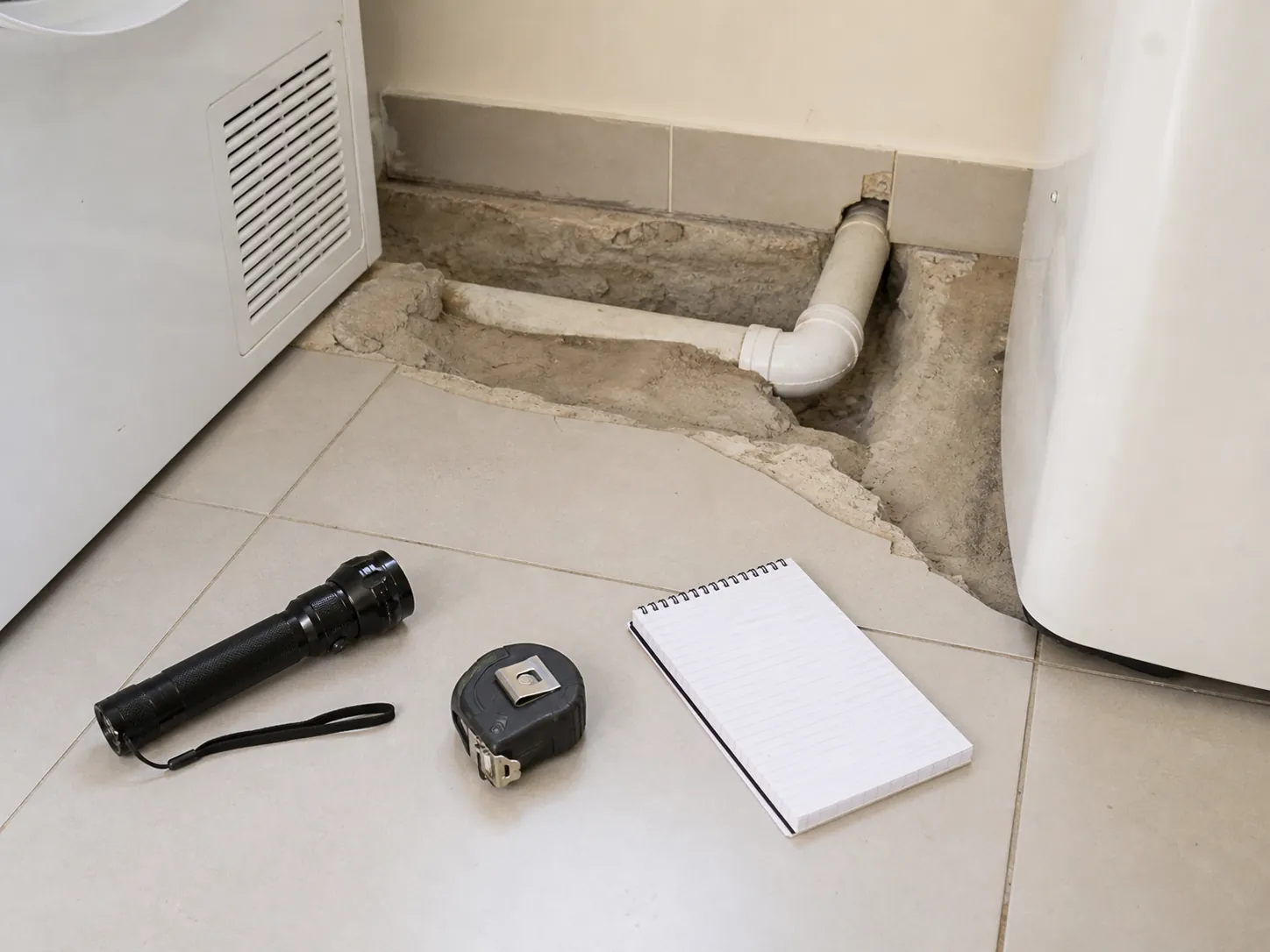
That tells you whether the layout you want is realistic before anything is ordered. If you'd like the plumbing and layout assessed together, that's how our laundry room renovation services in Geelong begin.
Related guides
Frequently Asked Questions
How do you hide laundry room plumbing?
Build the taps and waste into cabinetry with an access panel, or run pipework inside the wall during rough-in. Keep a way to reach them for repairs.
Do you need the plumbing done before laundry installation?
Yes. Plumbing and electrical rough-in happen before wet-area work, tiling and cabinetry, so the positions must be decided first.
How much does it cost to move laundry plumbing?
It depends on how far the services move and the floor type; moving a waste through a concrete slab adds the most work. It's priced after a site assessment.
Not sure if your plumbing can move?
We'll check the floor, waste route and services on site before any layout is locked in.
Book a site assessmentSources
- Building and Plumbing Commission: plumbing insurance and compliance certificates
- Building and Plumbing Commission: engaging a plumber
- HIA: National Construction Code 2025 (Victorian lead-free plumbing products)
General information, not advice for a specific property. Requirements depend on the building, the work and the current NCC edition.