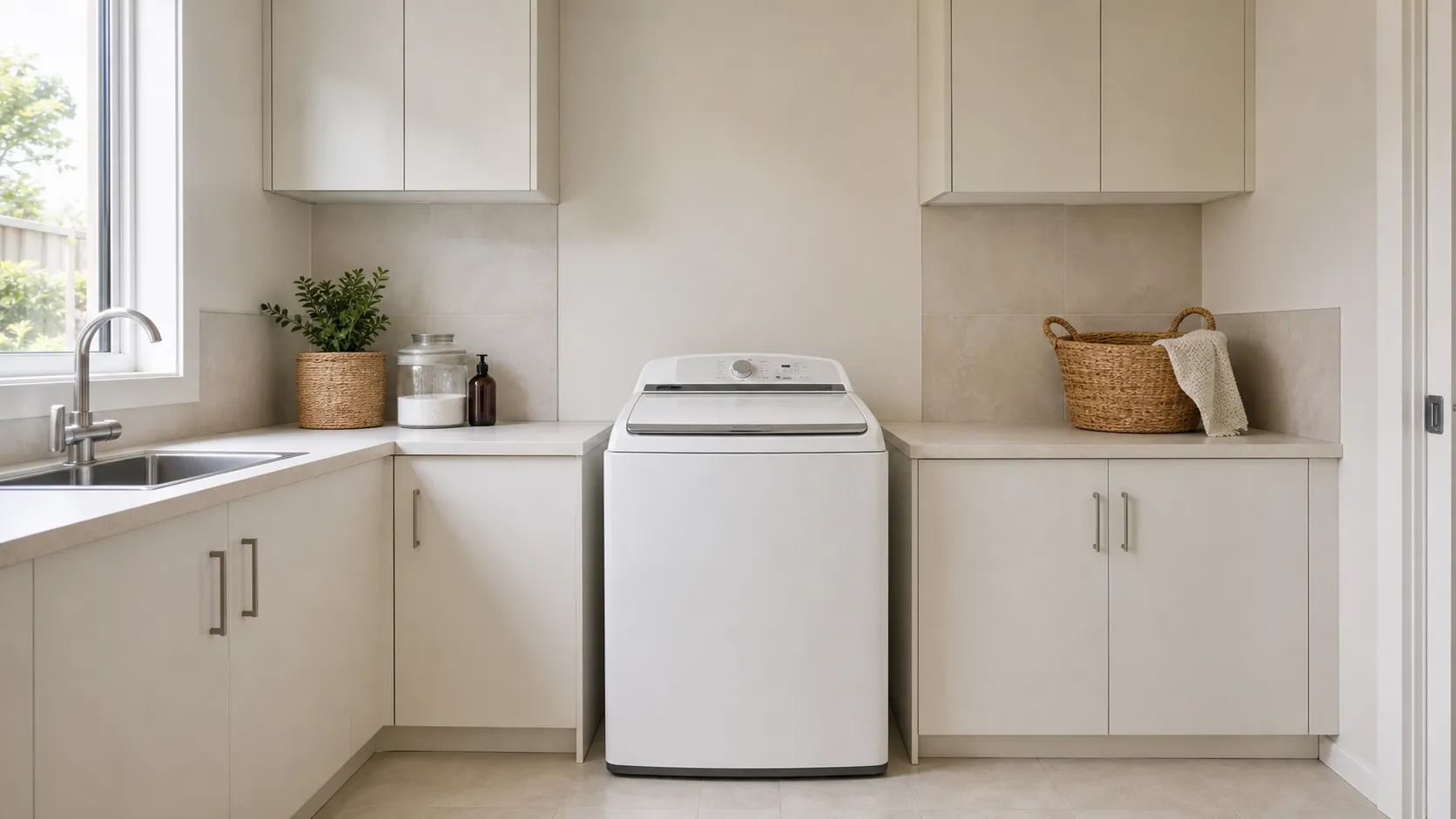
A top loader needs clear space above its lid, so a fixed bench can't run over it. The usual options are a gap in the bench, a hinged or lift-up bench section, or switching to a front loader that fits under the bench. The choice should be made before the cabinetry is measured.
Once cabinetry is built around one machine type, changing your mind is expensive, so the machine you choose shapes the whole room.
It's one of the first questions we ask when planning laundry renovations in Geelong, because the answer fixes the bench, cabinetry and tap positions.
Why the machine has to be chosen before the cabinetry
The machine decides the bench height, whether there's a continuous bench, where overhead cabinets can go and where the taps sit.
Homeowners sometimes reach this question just before demolition: they want a continuous benchtop but own a top loader, and have to choose between a hinged bench, moving the plumbing or buying a front loader. Making that decision earlier keeps all three options open.
Designing around a top loader
With a top loader, the space above the machine has to stay clear for the lid to open fully and for you to load it.
- Gap in the bench. The simplest option: the bench stops either side of the machine.
- Hinged or lift-up bench section. Gives a continuous folding surface when closed; needs suitable hardware and a clear routine for lifting it.
- No overheads above the machine. Overhead cabinets are usually kept clear of the lid's opening arc, or set higher.
- Bench elsewhere. In some rooms, the folding bench works better on another wall.
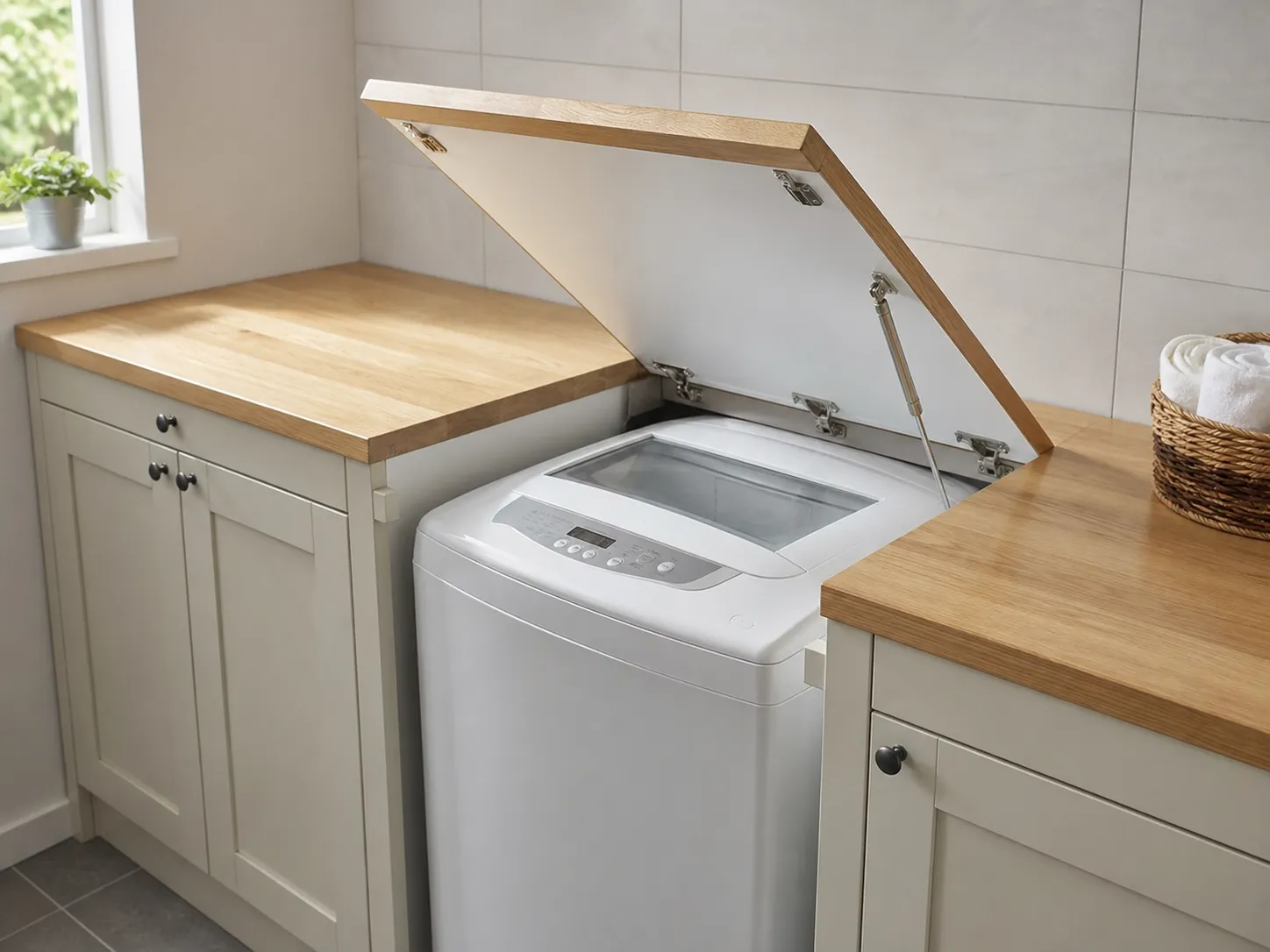
In a small laundry with a top loader, a hinged bench section can be the simplest way to get a continuous folding surface. Check the lid clearance in the manufacturer's installation guide for your model.
Designing around a front loader
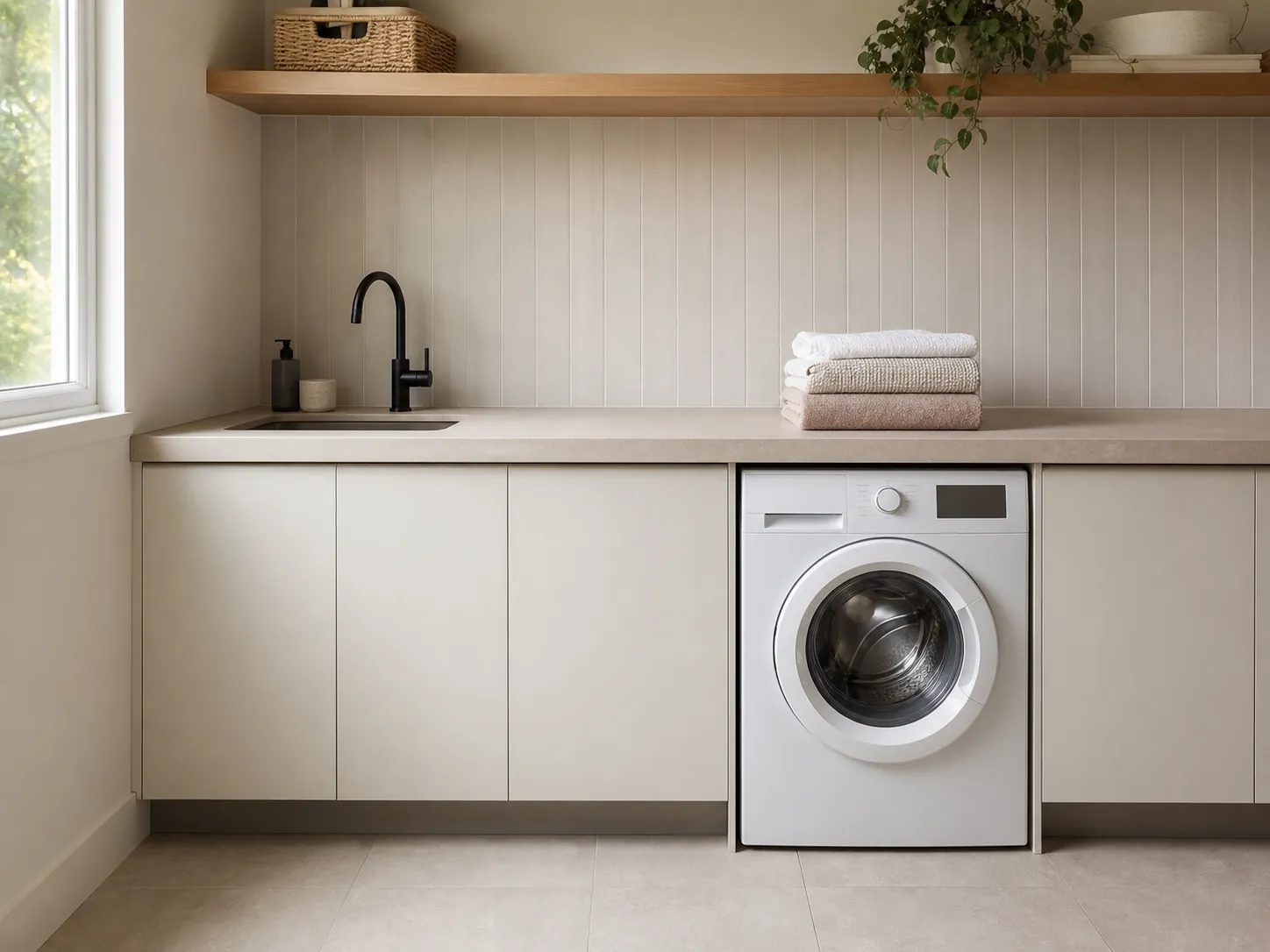
A front loader can sit under a bench, be stacked with a compatible dryer, or be raised on a plinth to reduce bending.
Under-bench installation gives the longest continuous surface. Stacking saves wall length but needs height and a dryer designed or approved for stacking. A raised position is easier on the back but uses more height and can limit overhead storage.
Top loader vs front loader for design
| Design factor | Top loader | Front loader |
|---|---|---|
| Continuous bench | Only with a hinged or lift-up section | Yes, under the bench |
| Stacking with a dryer | No | Possible with a compatible dryer |
| Overhead cabinets above | Must clear the open lid | Fine above the bench |
| Floor space in front | Less needed | Door swing needs clear space |
| Loading posture | Standing, reaching down into the drum | Bending, unless raised |
Designing so the next machine still fits
Leave some tolerance in the machine opening and keep taps and waste accessible, so a replacement machine of a different size can fit without rebuilding cabinetry.
Machines rarely last as long as cabinetry. Building the opening tight to one model, or hiding the taps behind fixed panels, can make the next purchase difficult. If you're likely to switch machine type later, discuss it at design stage, because it can affect bench height and tap position.
If you're switching machine type mid-renovation
Decide before the cabinetry is measured. Changing from a top loader to a front loader after that point can mean remaking cabinetry or benchtops.
If the tap and waste positions suit one machine type better than the other, that can also tip the decision. Moving the taps and waste has its own costs, and each machine type opens up different small laundry layouts.
If you'd like the cabinetry designed around the specific machines you'll use, including a replacement plan, talk to our laundry renovation specialists in Geelong.
Related guides
Frequently Asked Questions
Which washing machine is best for a laundry renovation, top loader or front loader?
For design, a front loader allows a continuous bench over it or stacking with a dryer; a top loader needs clear space above the lid. Choose based on the layout you want, and decide before the cabinetry is measured.
Is a top-loading machine suitable for a European laundry?
It can be, but only with open space above the lid, which rules out stacking and a bench over the machine. Most European laundries use a front loader for that reason.
Can you have a benchtop over a top loader?
Not a fixed one. The options are a gap in the bench, a hinged or lift-up section, or switching to a front loader before the cabinetry is built.
Choosing machines before you renovate?
We design the bench and cabinetry around the machines you'll actually use, with room for the next one.
Talk to our team