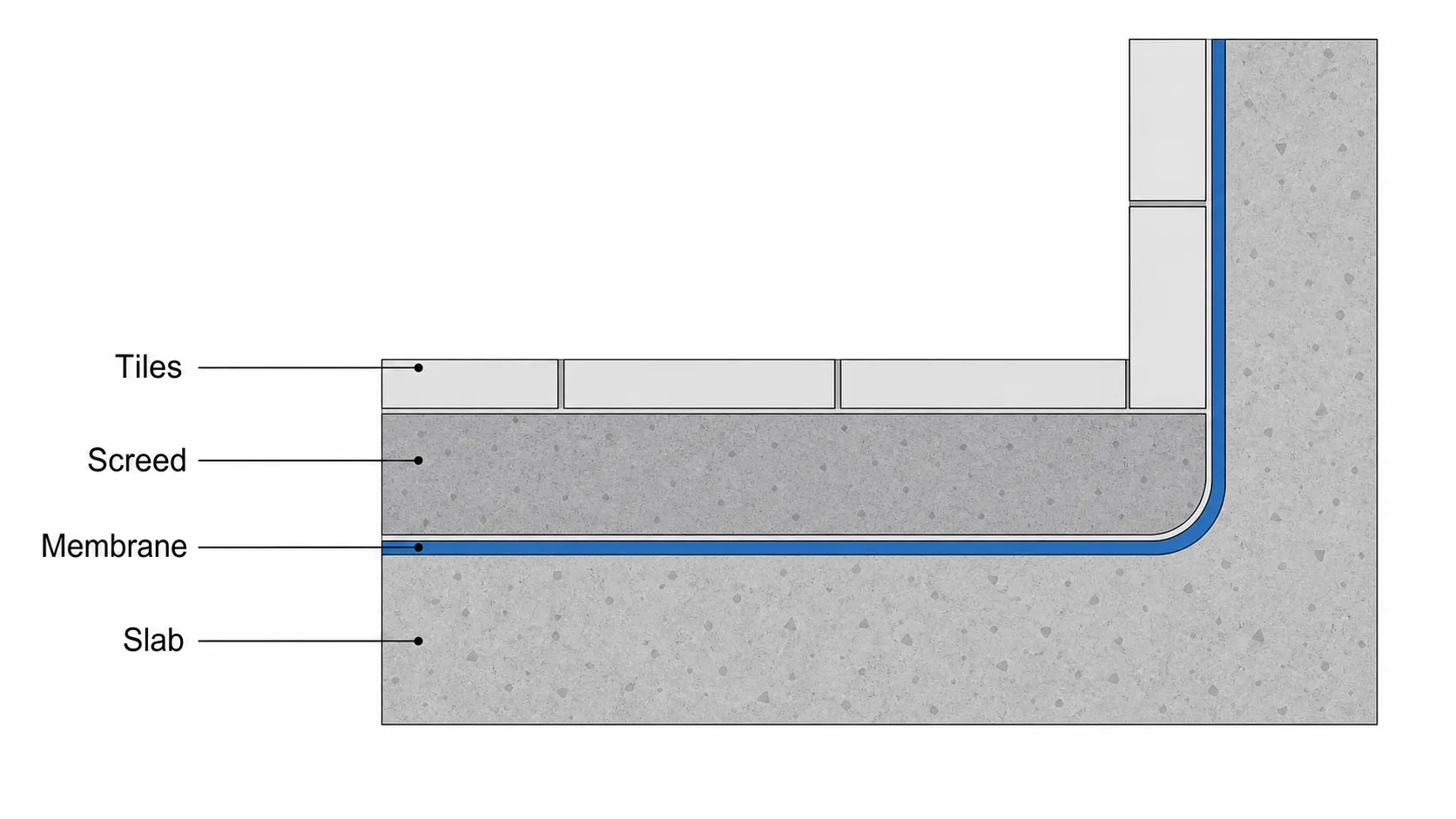
A laundry is a wet area under the National Construction Code. In a typical house laundry without a shower, the floor and floor-to-wall junctions must be water resistant, with waterproofing required at specific elements such as wall junctions where a tub is fixed and relevant penetrations. If a shower shares the room, the shower area has additional waterproofing requirements.
Laundry waterproofing requirements are often misunderstood, usually because "waterproofing" is used loosely for two different standards.
Wet-area treatment is part of our laundry room renovation services in Geelong, and it starts with knowing what the code requires.
Waterproof vs water resistant
A waterproof system stops water passing through it. A water-resistant system resists water but isn't designed to hold back water continuously. The NCC requires each part of a wet area to be protected by a system that is either waterproof or water resistant, depending on the area (ABCB Housing Provisions, Part 10.2).
| Standard | What it means | Examples the NCC deems to meet it |
|---|---|---|
| Waterproof | Stops water passing through | Membranes complying with AS/NZS 4858; stainless steel; waterproof sheet flooring with waterproof joints |
| Water resistant | Resists water, for areas that get splashed rather than soaked | Tiles or sealed sheet flooring over a water-resistant substrate such as concrete or compressed fibre-cement |
What the NCC requires in a laundry
For a laundry without a shower in a house, the Housing Provisions set these minimums:
| Area | Requirement |
|---|---|
| Laundry floor | Water resistant |
| Floor-to-wall junctions | Water resistant; where a flashing is used, its horizontal leg at least 40 mm |
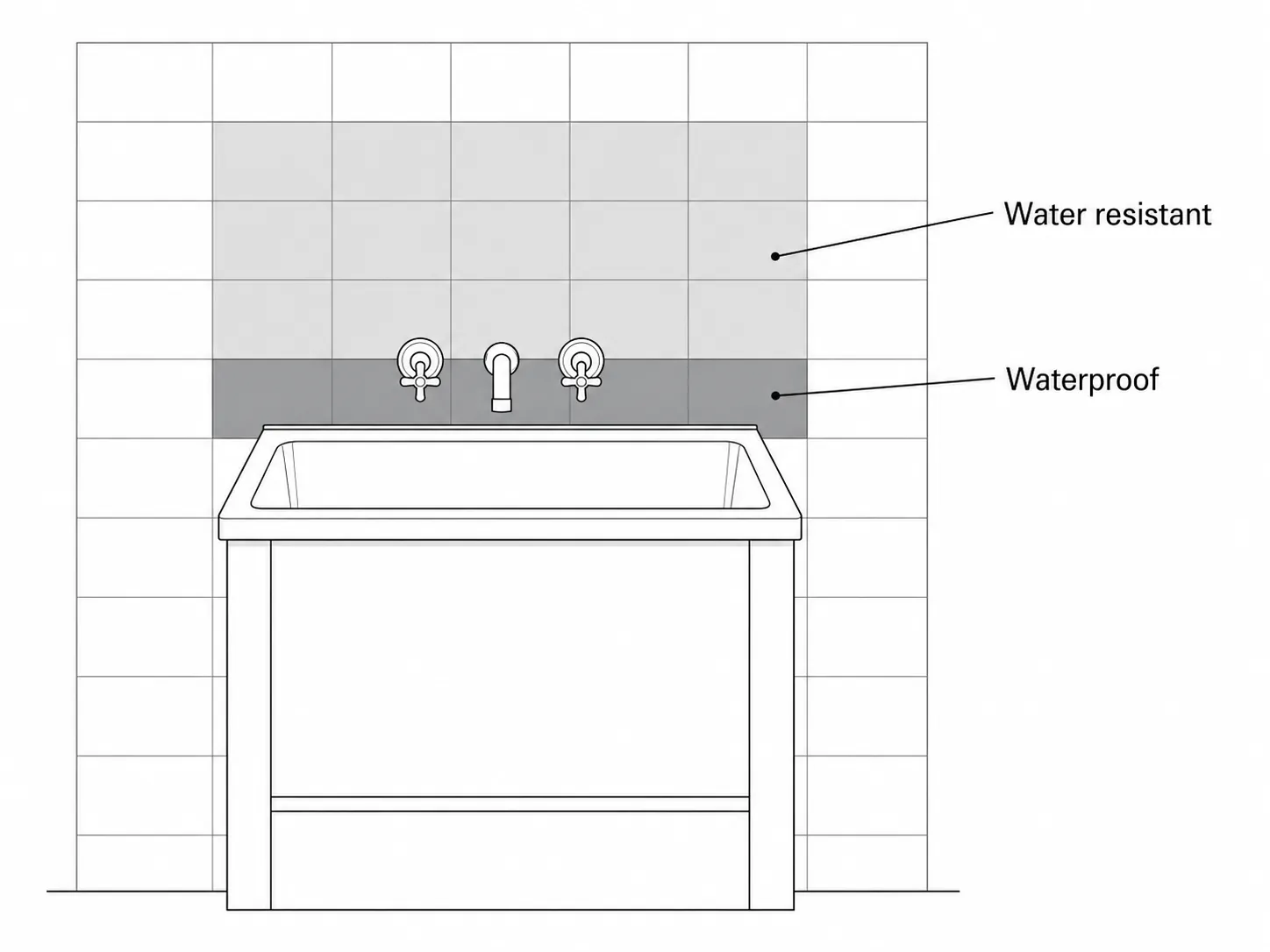
| Walls beside a laundry tub within 75 mm of the wall | Water resistant to at least 150 mm above the tub, for the length of the tub |
| Wall junction where the tub is fixed to the wall | Waterproof |
| Tap and spout penetrations in those surfaces | Waterproof |
AS 3740 is the alternative way to comply. It groups wet areas by risk, and a laundry without a shower falls in its lowest-risk category (BPC).
Floor wastes and falls
A floor waste isn't required in every laundry. In a house, a laundry without a shower generally doesn't need one. Victorian guidance identifies where they are required: in shower areas, and in apartments and other Class 2, 3 or 4 buildings where a bathroom or laundry sits above another dwelling or a public space (BPC Practice Note SP 01).
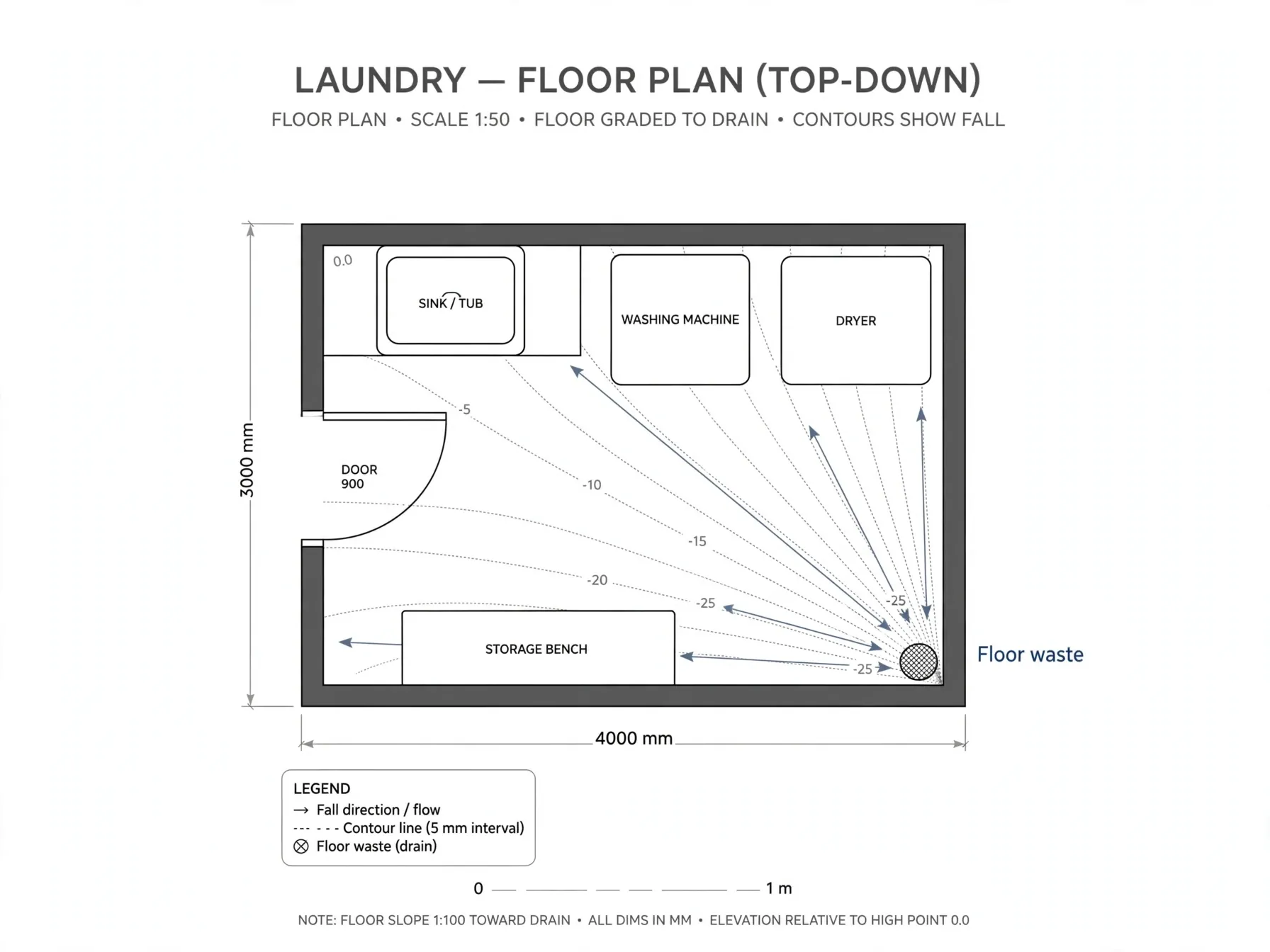
A laundry floor waste is a drain set into the floor. If one is installed, the Housing Provisions require the floor to fall to it continuously at a minimum of 1:80 (BPC), and in a shower area no steeper than 1:50 (BPC). Where one isn't required, adding it is a design choice to discuss with your renovator and plumber, because it changes the screed and tiling.
When a laundry needs more than the minimum
The requirements go up when a laundry shares its room with a shower, and can differ with the type of floor.
- A shower in the same room: the shower area must be waterproof, including its floor and walls to at least 1,800 mm above the floor substrate, as in a shared bathroom and laundry.
- Converting to a bathroom: when you convert a laundry into a bathroom, the room takes on bathroom requirements.
- Timber-based floors: particleboard, plywood and other timber floors can carry stricter requirements than concrete. Ask your renovator to confirm against the current Housing Provisions.
Doing more than the minimum
Some renovators choose to waterproof the whole laundry floor and the splashback zone, even where the code minimum is water resistant. That's a practice choice, not a code requirement.
The reasoning is that a slow leak under a washing machine or trough may go unnoticed for a long time. Ask what your renovator's standard specification is, and whether it goes beyond the minimum.
Who is responsible for getting it right
In Victoria, the registered builder is responsible for making sure waterproofing work complies with the Building Act, the Regulations and the building permit, and it needs to be designed as a system, from the substrate to the finished floor (BPC).
Waterproofing happens after plumbing rough-in and before tiling, so its timing depends on the renovation sequence. If you'd like the wet-area scope for your laundry confirmed, talk to us about laundry renovations in Geelong, or about our waterproofing services on their own.
Related guides
Frequently Asked Questions
Do you need to waterproof a laundry?
A laundry is a wet area. In a typical house laundry without a shower, the floor and floor-to-wall junctions must be water resistant, with waterproofing required at specific elements such as wall junctions where a laundry tub is fixed and relevant penetrations. If a shower shares the room, the shower area has additional waterproofing requirements.
Do laundry floors need to be waterproofed?
Not always. In a typical house laundry without a shower, the minimum requirement for the floor is water resistance rather than full waterproofing. Where a floor waste is required or provided, the applicable NCC requirements for waterproofing and falls must also be followed. A shower within the laundry has additional waterproofing requirements.
How do you waterproof a laundry?
Waterproofing a laundry involves using compliant wet-area materials, sealed junctions and, where waterproofing is required, a suitable membrane system installed in accordance with the applicable NCC requirements and relevant standards. The work should be carried out by an appropriately qualified professional rather than as a DIY job.
Can you waterproof a laundry if the walls are plasterboard?
Water-resistant plasterboard can form part of a compliant laundry wall, but the board alone does not make the wet area compliant. The substrate, surface finish, sealed junctions and any required membrane must work together to meet the applicable NCC requirements. Areas that must be waterproof, such as a shower area, require the appropriate waterproofing system.
Want your laundry's wet-area work done right?
We coordinate waterproofing with plumbing, tiling and cabinetry so each stage protects the next.
Ask about your laundrySources
- Building and Plumbing Commission: Waterproofing of wet areas
- ABCB Housing Provisions, Part 10.2 Wet area waterproofing
- Building and Plumbing Commission Plumbing Practice Note SP 01: Floor waste gullies in urinal compartments and other wet areas
- Building and Plumbing Commission: Waterproofing and structural integrity FAQs
- Building and Plumbing Commission fact sheet: Water ingress in buildings (waterproofing as a system; builder responsibility)
- Building and Plumbing Commission: Practitioner Education Series, waterproofing of wet areas (AS 3740 risk categories)
- HIA: NCC 2025 adopted in Victoria from 1 May 2026
- ConPro: NCC 2025 waterproofing changes (2026)
General information, not advice for a specific property. Requirements depend on the building, the work and the current NCC edition.