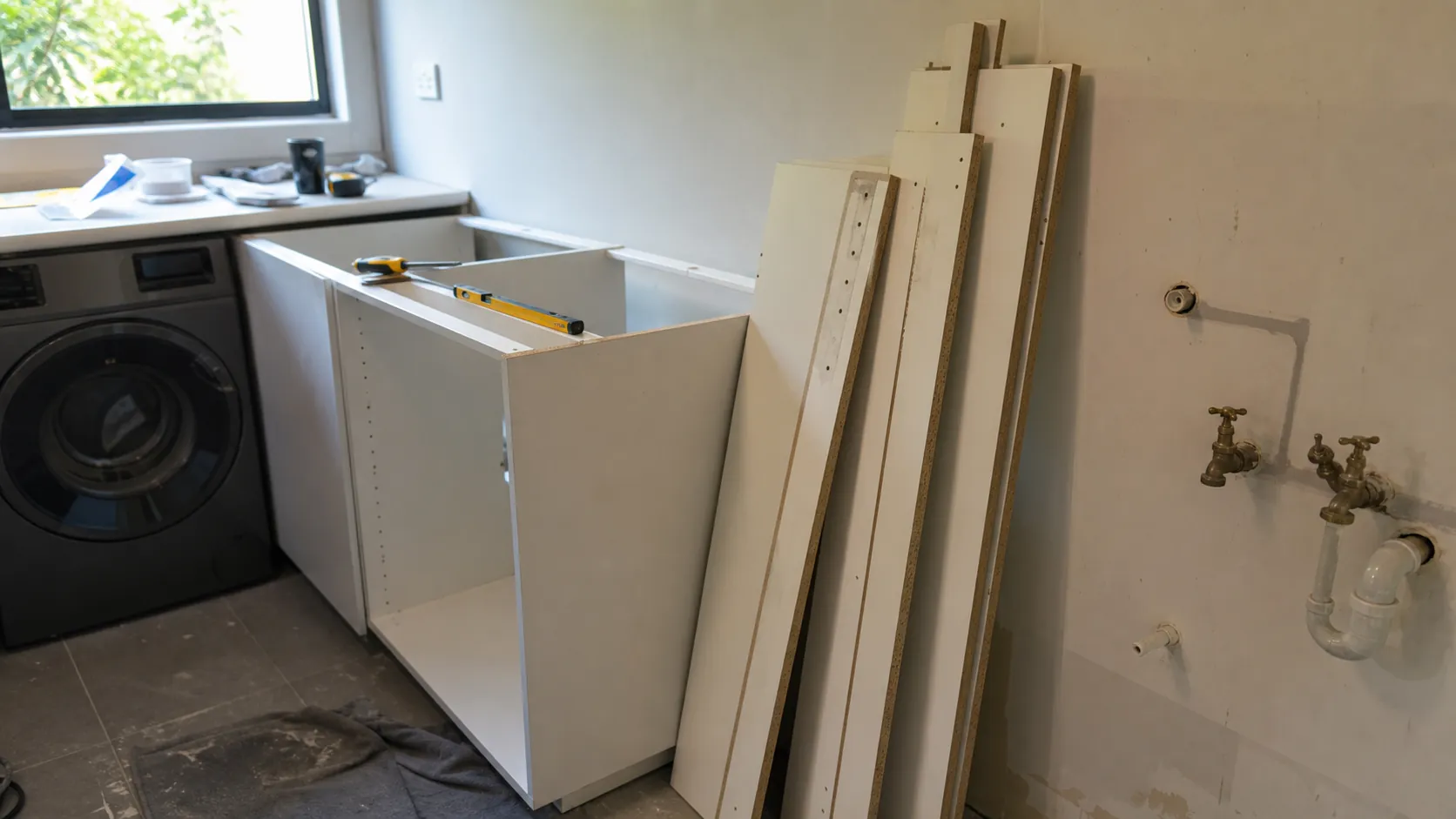
You can often do cosmetic and assembly work yourself, such as painting and fitting flat-pack cabinetry. In Victoria, plumbing must be done by a licensed or registered plumber and electrical work by a licensed electrician. A registered builder is required for domestic building work over $10,000.
Plenty of homeowners take on a DIY job, at least in part. Homeowners documenting their first renovation often describe doing the cabinetry and finishes, and leaving electrical work and stone benchtops to professionals. The key is knowing where the line sits before you start.
Where your plan needs licensed trades, that's the work our laundry renovations in Geelong coordinate.
Who can do each part of a renovation
| Task | Who can do it | Source |
|---|---|---|
| Painting, removing loose items, assembling flat-pack cabinetry | Usually the homeowner | General practice |
| Disconnecting, moving or connecting taps, waste pipes or the trough | Licensed plumber, or a registered plumber supervised by one | BPC |
| Plumbing compliance certificate (work valued at $750 or more) | Licensed plumber only | BPC |
| New power points, lighting, exhaust fan wiring | Licensed electrician | Energy Safe Victoria |
| Domestic building work valued over $10,000 | Registered builder | BPC |
| Home Warranty insurance (contracts over $20,000) | Taken out by the builder before payment is requested | BPC |
What homeowners commonly do themselves
The most common DIY tasks are the ones that don't need a licence: preparation, painting and cabinetry assembly.
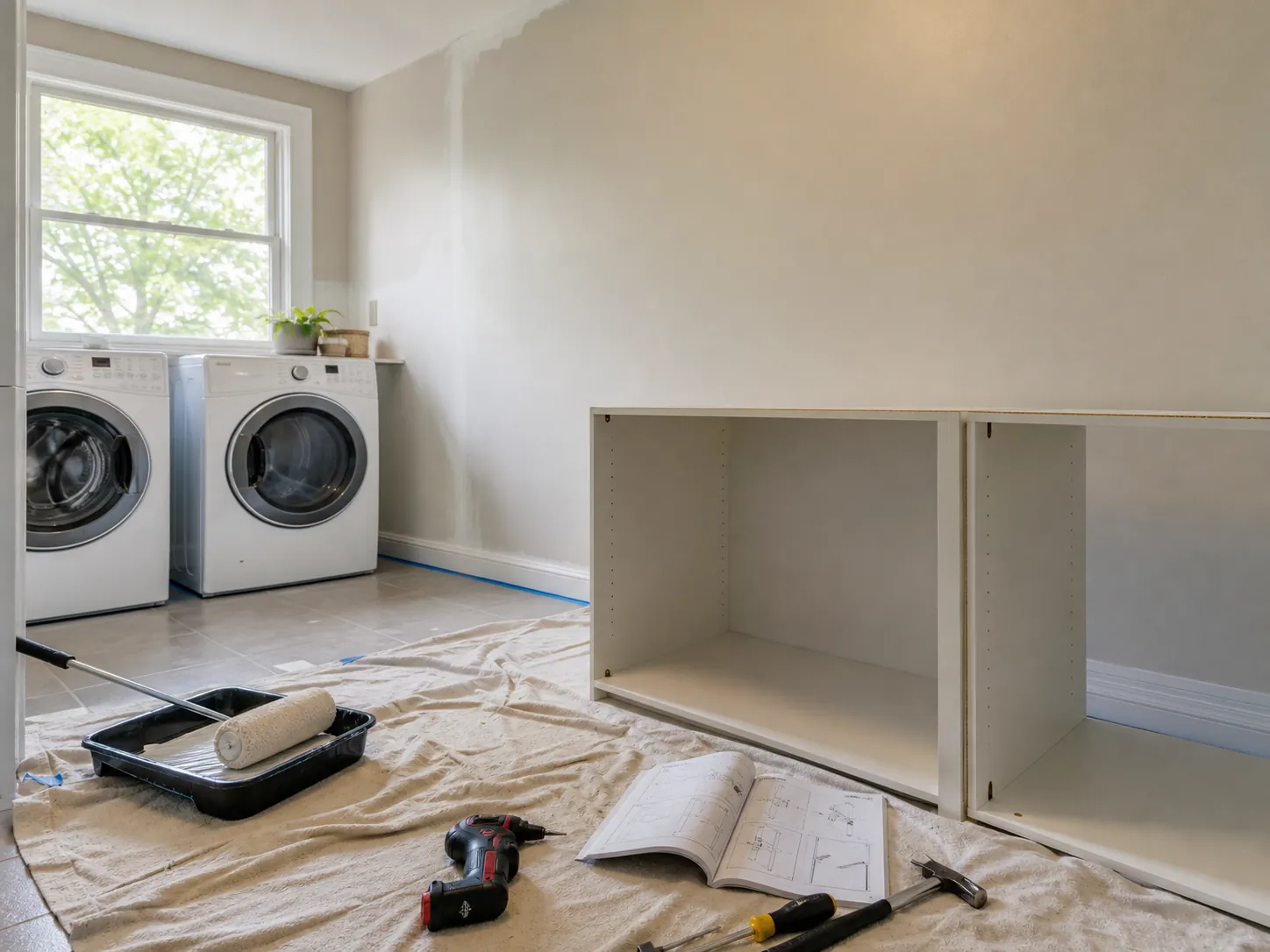
- Clearing the room and removing loose items
- Painting walls and ceilings
- Assembling and installing flat-pack cabinetry, where no plumbing or electrical connection is involved
- Fitting handles, shelving and accessories
What must be done by a licensed trade in Victoria
Plumbing and electrical work must be done by appropriately licensed trades, whatever the size of the job.
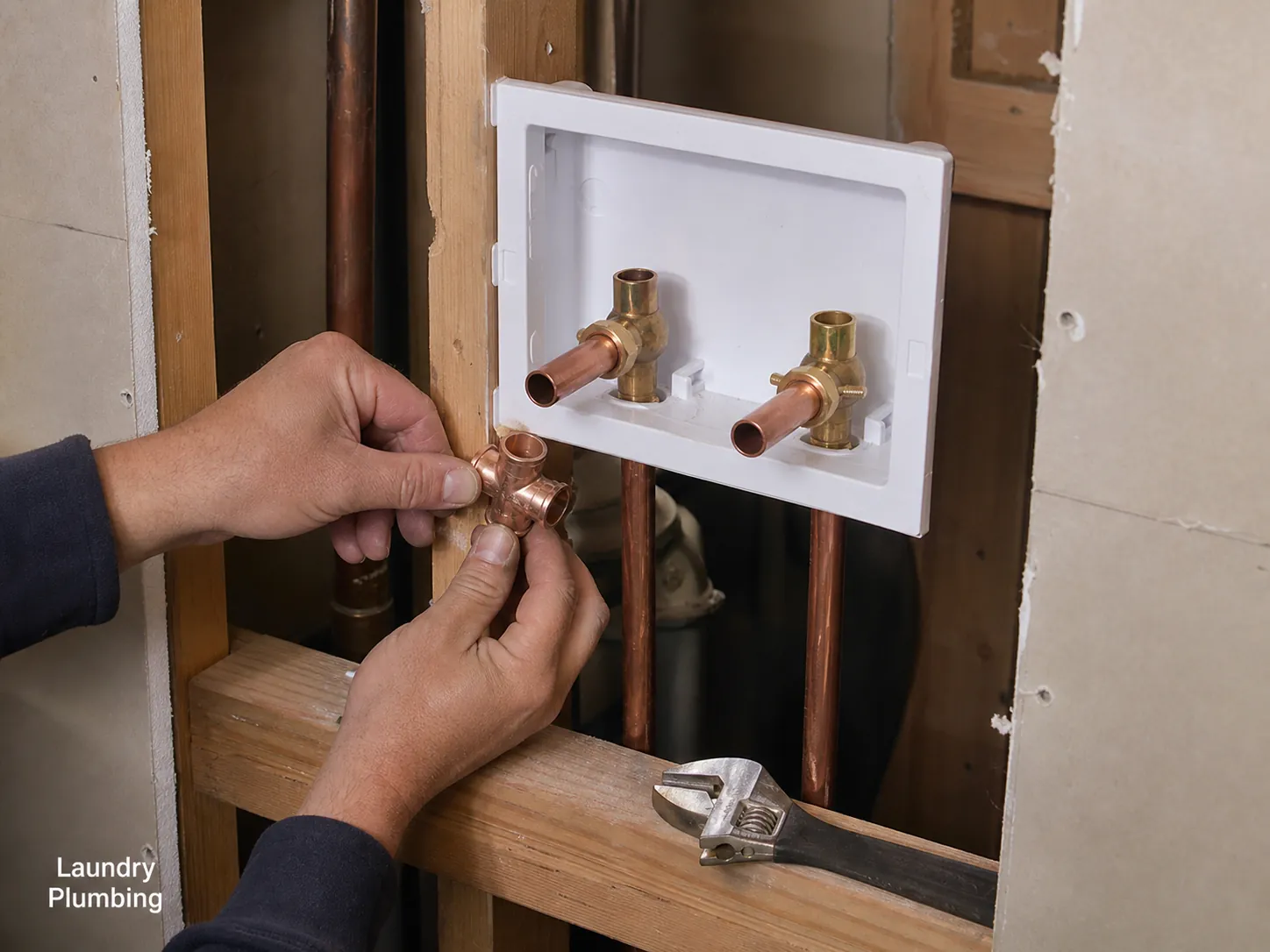
For plumbing, a practitioner must be licensed, or registered and working under a licensed plumber's supervision (Building and Plumbing Commission). Only a licensed plumber can issue a compliance certificate, which confirms the work is covered by insurance for six years (BPC). Electrical work needs a licensed electrician.
When a registered builder is required
Domestic building work valued at more than $10,000, including labour, materials and GST, needs a registered builder, and Home Warranty insurance, which replaced domestic building insurance for contracts signed from 1 July 2026, is required once the contract price passes $20,000 (registered builders; Home Warranty insurance).
Victoria also has an owner-builder pathway, with its own obligations. Check the Building and Plumbing Commission's owner-builder guidance before relying on it (BPC).
What DIY renovators most often underestimate
The hardest parts of a DIY laundry are usually sequencing the trades and the time the laundry is out of action, not the individual tasks.
- Sequencing: plumbing and electrical rough-in must happen before walls, floors and cabinetry are finished, in a set renovation sequence.
- Wet-area work: floors and junctions have specific waterproofing requirements.
- Measurements: cabinetry has to suit machine clearances, taps and waste.
- Downtime: DIY work often takes longer, and the household needs somewhere to wash in the meantime.
The hybrid approach
A common middle path is for the homeowner to handle preparation and finishes, while licensed trades or a renovator handle plumbing, electrical and wet-area work.
That can reduce cost while keeping the licensed and wet-area work certified. It works best when the split is agreed in writing before work starts, so everyone knows who does what and when. It's one of several ways to renovate on a budget.
What to check when choosing laundry renovators
Check that renovators hold the right registration and licences for the work, put the full scope in a written quote, and can tell you who does each trade and who signs it off.
- A registered builder and a written contract for domestic building work over $10,000 (Building and Plumbing Commission)
- Home Warranty insurance for contracts over $20,000, taken out before any payment is requested (BPC)
- A licensed plumber who will issue a compliance certificate for plumbing work valued at $750 or more
- A licensed electrician for any new circuits, power points or lighting
- An itemised quote that lists inclusions, exclusions and any provisional sums
- One named person coordinating the trades and the order of work
If you're doing part of the job yourself, agree in writing which tasks are yours and which the renovator covers, so nothing falls between the two.
Deciding which route suits your laundry
If your renovation is cosmetic and keeps everything where it is, much of it may be DIY-able. If it moves services, involves wet-area work or needs several trades, professional coordination usually saves time and rework.
Once plumbing, electrical and wet-area work are in scope, someone has to schedule the trades and make sure each stage is signed off. That's what professional laundry renovation in Geelong covers.
Related guides
Frequently Asked Questions
How can I remodel my laundry room myself?
Do the preparation, painting and flat-pack cabinetry yourself, and bring in a licensed plumber and electrician for anything connected to water or power.
Can I install my own laundry cabinets?
Yes, flat-pack laundry cabinets are a common DIY task, as long as disconnecting or connecting the trough and taps is left to a licensed plumber.
Which parts of a DIY laundry renovation need a professional?
Plumbing, electrical work, and often stone benchtops and wet-area work. Homeowners documenting their own DIY laundries describe leaving these to trades.
Doing part of it yourself?
Tell us which parts you'd like to do, and we'll handle the licensed and wet-area work.
Talk about your projectSources
- Building and Plumbing Commission: engaging a builder
- Building and Plumbing Commission: domestic building and Home Warranty insurance
- Building and Plumbing Commission: plumbing insurance and compliance certificates
- Building and Plumbing Commission: engaging a plumber
- Building and Plumbing Commission
- Energy Safe Victoria: Certificates of Electrical Safety
General information, not advice for a specific property. Requirements depend on the building, the work and the current NCC edition.